6 Creative Food Pantry Fundraising Ideas for Nonprofits to Boost Revenue

Editor’s Note — Updated May 2026. Our team reviews nonprofit and fundraising guides quarterly, cross-referencing program details against Charity Navigator, CharityWatch, GuideStar/Candid, and BBB Give.org — and we publish program or naming updates within 7 days of verified changes. Spotted an outdated name or broken link? Email team@nonprofitpoint.com and we’ll correct the record.
Nonprofit organizations are known to be one of the largest social service providers in communities. Unfortunately, these organizations can have a difficult time generating donations and sustaining themselves.
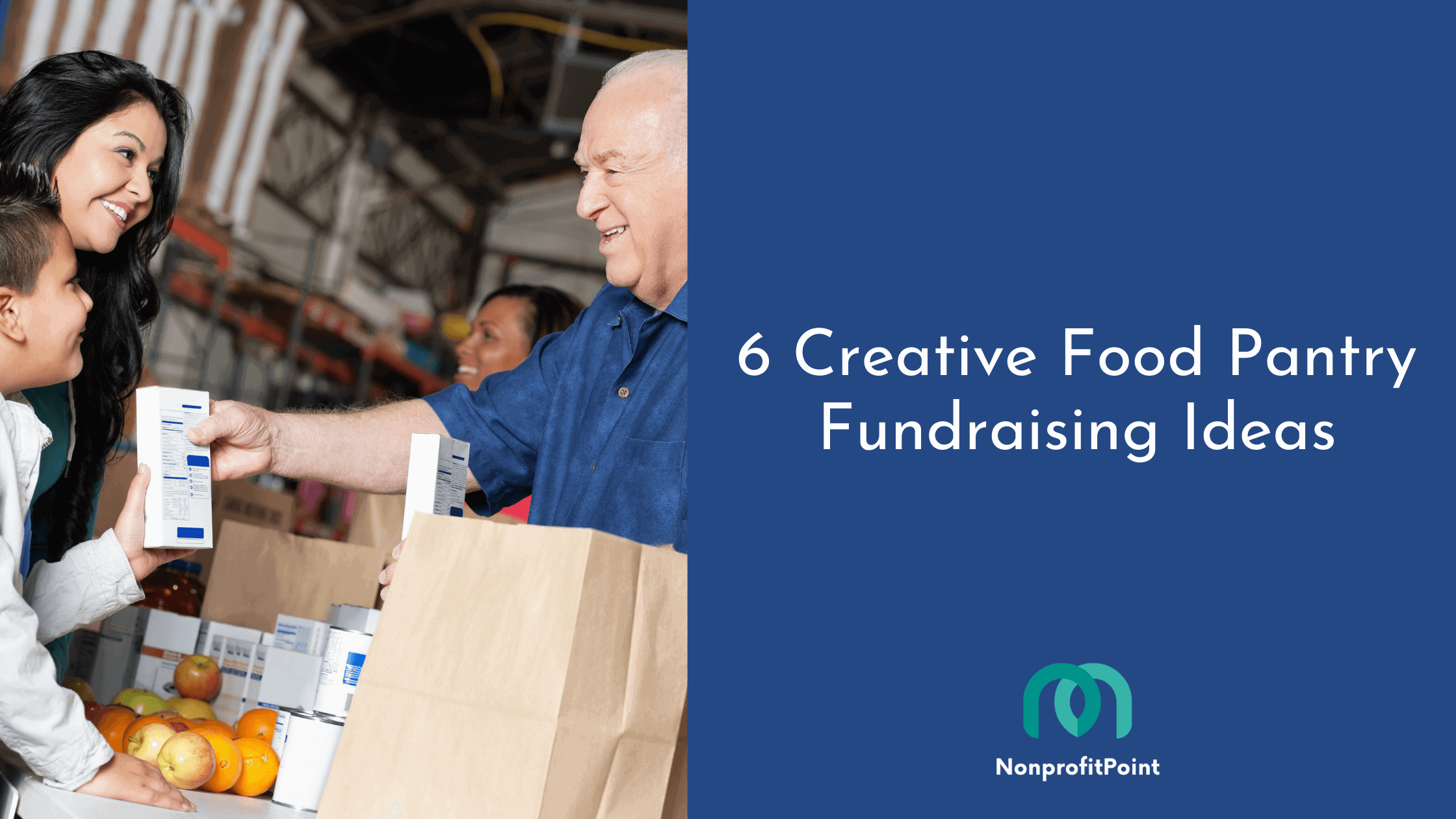
Food pantry nonprofit organizations are able to provide families with much-needed food and help those in need. Not only does this give people an opportunity to help, but it also helps get food into the hands of those who need it most. The benefits of hosting a fundraising event aren’t limited to the organization. Food pantry fundraising is a good way for individuals and businesses to give back as well as to promote their brand.
Here are 6 creative food pantry fundraising ideas to boost revenues:
1. Putting on a food festival

One of the best ways to raise money is by hosting a food festival. This way, people who attend the event can also purchase food from your organization’s pantry during the festival. Not only will this help you raise money, but it will also help increase your visibility in the community.
It’s important to have a clear message with your event so that your audience knows what they can expect. You’ll want to advertise that there will be a variety of foods, as well as games for kids and live music. This way, not only do you get more people through the door, but you also get families who are excited about coming out and enjoying themselves.
You want to make sure that the event is free for anyone who wants to come through (which means you can’t sell tickets). With that said, if someone purchases food from your pantry during the event then they should be able to donate an amount towards that purchase. You’ll then collect all of those donations at the end of the night and donate them to your charitable cause or your nonprofit’s mission.
2. Selling baked goods

Many food pantries offer baked goods for sale to the public. This is a great way to generate revenue for your nonprofit because it can be done with a little upfront cost. You can bake cookies, brownies, or any other type of baked goods and sell them at markets, bake sales, or even online through websites like Etsy.
Pro tip: You can even start an online fundraising campaign within minutes with Donorbox. Just set up a donation page and start sharing links with the people to contribute.
3. Pairing up with Restaurants

One great way for nonprofits to make money with food pantry fundraising is by pairing up with restaurants in order to get them involved in the process. Restaurants often have leftover food at the end of the day, which they would otherwise discard.
These leftovers can be donated and the restaurant will receive a tax write-off in exchange for donating the leftovers. This will not only provide a space for people in need to find food, but it will also help your organization raise funds!
4. Participating in a walk-a-thon
Walk-a-thon events are typically held over the course of a weekend and involve people walking around a designated area. This is one of the most popular and cost-effective ways that nonprofits can fundraise for themselves.
These events often involve an auction, which many people enjoy because they get to buy items at discounted prices while still having money left over to donate. Other times, local businesses will donate their products as raffle prizes, providing more opportunities for people to participate.
A walk-a-thon can be especially beneficial for those communities who live in low-income areas with little access to healthy food options. It not only provides an opportunity for people who want to help; it also provides healthy food options that these communities may not otherwise have access to.
5. Have a Penny Drive

Collect pennies from employees and then donate the money to your food bank. A penny drive is an event where people collect coins in order to raise funds for a charity or cause. The idea behind this fundraising technique is that it’s easier than asking others if they would be willing to make donations because everyone has something of value: spare change! It can also help build community spirit by having fun while doing good work.
Why it works: This is a great way to remind your employees that giving back is part of your DNA and you want them to feel good about being part of your company.
6. Have a dinner auction
Ask local restaurants to donate a meal for your food pantry with a set number of people. You can also ask employees or members to donate a dinner to your pantry.
This is an easy way for companies, organizations, schools and other groups who have extra meals that they don’t want anymore but still need them in the community instead of throwing it away by donating it. The amount raised at this event will go towards purchasing new items needed in the food bank such as canned vegetables or fruit so you are able to make sure everyone has enough healthy foods on hand when they come into use.
Conclusion
So, what are you waiting for? Get out there and start fundraising for your food pantry today. There are so many options when it comes to fundraising for your nonprofit. Pick the one that works best for your organization, mission and your community.
Explore Web Story Version
Food Pantry Fundraising FAQs
How much can a food pantry fundraiser realistically raise per campaign?
Most food pantry fundraisers raise $2,500–$45,000 per campaign, with the spread driven by event format, donor-network depth, and whether the program is single-event, recurring-monthly, or annual-anchor. Small single-event food-pantry campaigns (community-meal events, food-drive events, virtual-fundraiser events with 75–200 attendees and supporting donor-network of 200–500) typically net $1,500–$6,500. Mid-tier annual food-pantry programs (annual-gala events, monthly-recurring-giving programs, structured corporate-and-grant programming with annual revenue from 350–1,000 donors) consistently raise $25,000–$85,000. Premium signature regional food-bank programs (Feeding America affiliate operations, regional-multi-county food-bank programs serving 25,000+ households annually with diversified revenue from individual donors, corporate-grants, federal-USDA-program participation, and faith-community partnerships) operate at $1–$45 million annual revenue scale. The single biggest revenue lever for community-scale food pantries is multiplication-of-funds messaging — food pantries can typically convert $1 of donation to 4–10 meals through bulk-purchasing partnerships with Feeding America, regional food banks, and USDA commodity programs; the dollar-to-meal conversion messaging consistently produces 35–65 percent higher per-donor average gift than abstract-revenue messaging because the concrete-impact framing supports decision-confidence at the donor moment-of-decision.
Which food pantry fundraising formats produce the strongest community engagement?
Five formats consistently outperform across documented food-pantry fundraising programs: (1) community-meal-event fundraisers — structured community-dinner or community-breakfast events ($15–$50 per-attendee admission, typically 75–350 attendees, raising $3,500–$18,500 per event) combining meal-service with food-pantry mission-communication, volunteer-recognition programming, and direct-donation opportunities; the meal-event format consistently produces 35–55 percent higher per-attendee giving than abstract-fundraising events because the meal-experience creates relational-investment in the food-security mission; (2) Empty Bowls events — the international Empty Bowls signature-event format (community potters produce hand-crafted ceramic bowls, attendees receive a bowl plus a simple soup-and-bread meal for $20–$50 admission, with bowls intended as take-home reminders of food-insecurity) consistently produces $5,000–$45,000 per event for participating food-pantry organizations; the signature-format combination of art-and-mission creates strong year-over-year community-tradition value; (3) food-drive fundraising programs combined with cash-collection — structured community-food-drive programming (canned-good drives, non-perishable drives, holiday-meal-package drives) combined with cash-donation collection consistently produces $2,500–$15,500 per drive in cash plus 3,500–15,000 pounds of food product; the combined-format programming captures both the donate-food and donate-cash supporter segments with maximum operational efficiency; (4) restaurant-partnership and dining-out-for-charity programming — structured partnerships with local restaurants where the restaurant donates 15–25 percent of designated-day or designated-week sales to the food pantry, typically raising $1,500–$8,500 per event through partner-restaurant promotion to their existing customer base plus food-pantry promotion to their supporter network; the restaurant-partnership format builds reciprocal community-business relationships while requiring minimal volunteer-operations from the food pantry; (5) monthly recurring-giving programs — structured sustainer-program campaigns recruiting $10–$50 per-month recurring donors typically build to 75–500 sustainer-level donors over 18–36 months, producing $7,500–$300,000 annualized recurring revenue with 75–85 percent year-over-year retention; the sustainer-program structure provides operational-stability revenue that supports both ongoing food-purchase budgeting and program-investment planning. Avoid: abstract-only fundraising messaging (loses 35–65 percent of per-donor giving), skipping meal-experience or signature-event formats (loses community-engagement value), one-time-only-event focus without sustainer-program development (loses long-term operational stability), and missing restaurant and corporate partnership development (loses 25–45 percent of community-business supporter capture).
How do we coordinate with regional food banks and USDA programs for maximum impact?
Regional food-bank and USDA-program coordination is the operational variable that allows community food pantries to multiply $1 of cash-donation into 4–10 meals through bulk-purchasing and federal-commodity programming. Five coordination programs: (1) Feeding America affiliate-network partnership — the Feeding America network operates 200+ regional food banks serving 60,000+ partner agencies (food pantries, soup kitchens, shelters, community-meal programs) across the United States; partner-agency relationships with regional Feeding America food banks provide bulk-food-purchase access at $0.18–$0.40 per pound (vs $2–$4 per pound retail), with typical partner-agency annual purchase volumes ranging from 5,000 pounds (smallest community pantries) to 500,000+ pounds (largest community-network pantries); find your regional Feeding America food bank at feedingamerica.org/find-your-local-foodbank; (2) Emergency Food Assistance Program (TEFAP) participation — the USDA TEFAP program (administered through state-agency partners) distributes federal-commodity food products to qualifying food-pantry programs for distribution to income-eligible households (typically 185 percent of federal poverty level threshold); TEFAP commodity distribution typically includes shelf-stable products (canned proteins, canned vegetables, peanut butter, rice, pasta, dried beans) plus refrigerated-and-frozen products in some state programs; the TEFAP product flow supplements purchased-food inventory at zero cost to the pantry; (3) Commodity Supplemental Food Program (CSFP) participation — the USDA CSFP program provides monthly food-package distribution to qualifying low-income seniors (60-and-over) at participating food-pantry sites; CSFP program participation expands pantry-served populations while bringing federal-program income to the participating pantry; (4) state-and-regional food-rescue partnership programs — partnerships with regional grocery-store chains, restaurants, food-distributors, and food-manufacturers to recover excess-inventory and near-expiration food products that would otherwise enter the waste stream; food-rescue partnerships typically supply 25–55 percent of total-food-distribution volume for participating pantries, with operational programs ranging from same-day-pickup partnerships to scheduled weekly-distribution programs; coordinate through regional Feeding America food bank or state-association food-rescue programs; (5) corporate and faith-community sponsorship partnerships — structured partnerships with local grocery chains (Kroger, Publix, Safeway, regional chains), corporate-employer giving programs, faith-community congregation-distribution partnerships, and civic-organization (Rotary, Kiwanis, Lions Club, Knights of Columbus, Jewish Federation) programs provide ongoing operational revenue plus volunteer-hour contribution; the partnership programming typically contributes 25–45 percent of community food-pantry operational revenue beyond direct-donor fundraising. The combined federal-and-regional-and-corporate-and-community partnership programming, executed systematically alongside direct-donor fundraising, consistently allows community food pantries to convert $1 cash-donation into 4–10 meals through the bulk-and-federal-and-rescue-and-corporate revenue-and-product flow.
How do we maintain volunteer engagement, food-safety compliance, and operational continuity?
Volunteer-engagement, food-safety, and operational-continuity discipline is the operational variable that determines whether a food pantry sustains 5–15 year community-operation duration or fades within 2–3 years due to volunteer-burnout, food-safety-incident shutdown, or operational-process collapse. Five operating rules: (1) build a structured volunteer-program with recruitment, training, and recognition programming — standard volunteer-program structures include named-volunteer-coordinator role (paid-or-substantial-volunteer position with 15–25 hour weekly time commitment), volunteer-job descriptions covering distinct operational roles (intake-and-registration volunteers, food-sorting volunteers, distribution-day volunteers, food-rescue-pickup volunteers, administrative-and-data volunteers, special-event volunteers), structured-orientation-and-training programming for new volunteers, ongoing-recognition programming (volunteer-of-the-month acknowledgment, annual-recognition events, milestone-anniversary acknowledgment for 5-and-10-year volunteers), and volunteer-retention tracking; the structured program consistently produces 65–85 percent year-over-year volunteer-retention compared to 35–55 percent retention in ad-hoc volunteer programs; (2) implement food-safety compliance through formal Food Handler training and ServSafe certification programming — state-specific food-handler certification requirements vary, but most jurisdictions require Food Handler training for direct-food-contact volunteers and ServSafe Manager certification (or state-equivalent) for at least one person in operational leadership; the certification programming protects both the pantry-served households and the pantry-operating organization from foodborne-illness incidents and legal-liability exposure; resources include the National Restaurant Association ServSafe program (servsafe.com), state-health-department food-handler training programs, and Feeding America food-safety training programs for partner agencies; (3) implement structured cold-chain management for refrigerated-and-frozen-food handling — modern food-pantry operations increasingly include refrigerated-and-frozen-food distribution (dairy products, fresh meat, fresh produce, frozen-prepared-food products), which requires structured cold-chain compliance including refrigerated-storage capacity (typical operational needs are 100–500 cubic feet refrigerated and 50–200 cubic feet frozen storage for community-scale pantries), temperature-monitoring programming (continuous-temperature-logging or daily-temperature-check protocols), expiration-date tracking and FIFO (first-in-first-out) inventory management, and cold-chain compliance for food-rescue pickup-and-transport operations; the cold-chain discipline expands pantry-product-distribution to higher-nutritional-value fresh-and-frozen products while protecting against food-safety incidents; (4) plan operational-continuity through leadership-succession and process-documentation programming — food-pantry organizations frequently face leadership-transition risk (volunteer-coordinator transition, board-of-directors transition, executive-director transition) that can disrupt operational continuity; the continuity programming should include documented operational-procedures (intake protocols, food-rescue pickup-procedures, distribution-day operations, partner-agency communication procedures, federal-program reporting procedures), succession-planning for key roles, board-of-directors leadership-development programming, and inter-organizational partnerships with neighboring food pantries for mutual-aid coverage during transition periods; (5) maintain financial-reporting, IRS-compliance, and grant-readiness programming — standard nonprofit financial-reporting includes annual IRS Form 990 filing for 501(c)(3) organizations with $200K+ revenue (or 990-EZ for $50K-$200K revenue, 990-N postcard for under-$50K revenue), state-level annual-registration filings, audited or reviewed financial-statements for organizations seeking grant-funding partnerships, and structured financial-reporting to the board of directors; the financial-reporting discipline both maintains IRS compliance and positions the pantry for grant-funding partnerships with regional foundations, corporate-foundations, and federal-grant programs. Avoid: ad-hoc volunteer-program management (loses 30–50 percent of volunteer retention), missing food-handler and ServSafe certification (creates foodborne-illness and legal-liability risk), skipping cold-chain compliance for refrigerated-and-frozen distribution (creates food-safety risk and product-loss waste), missing operational-continuity planning (creates leadership-transition operational-collapse risk), and missing financial-reporting compliance (creates IRS-revocation and grant-readiness risk).