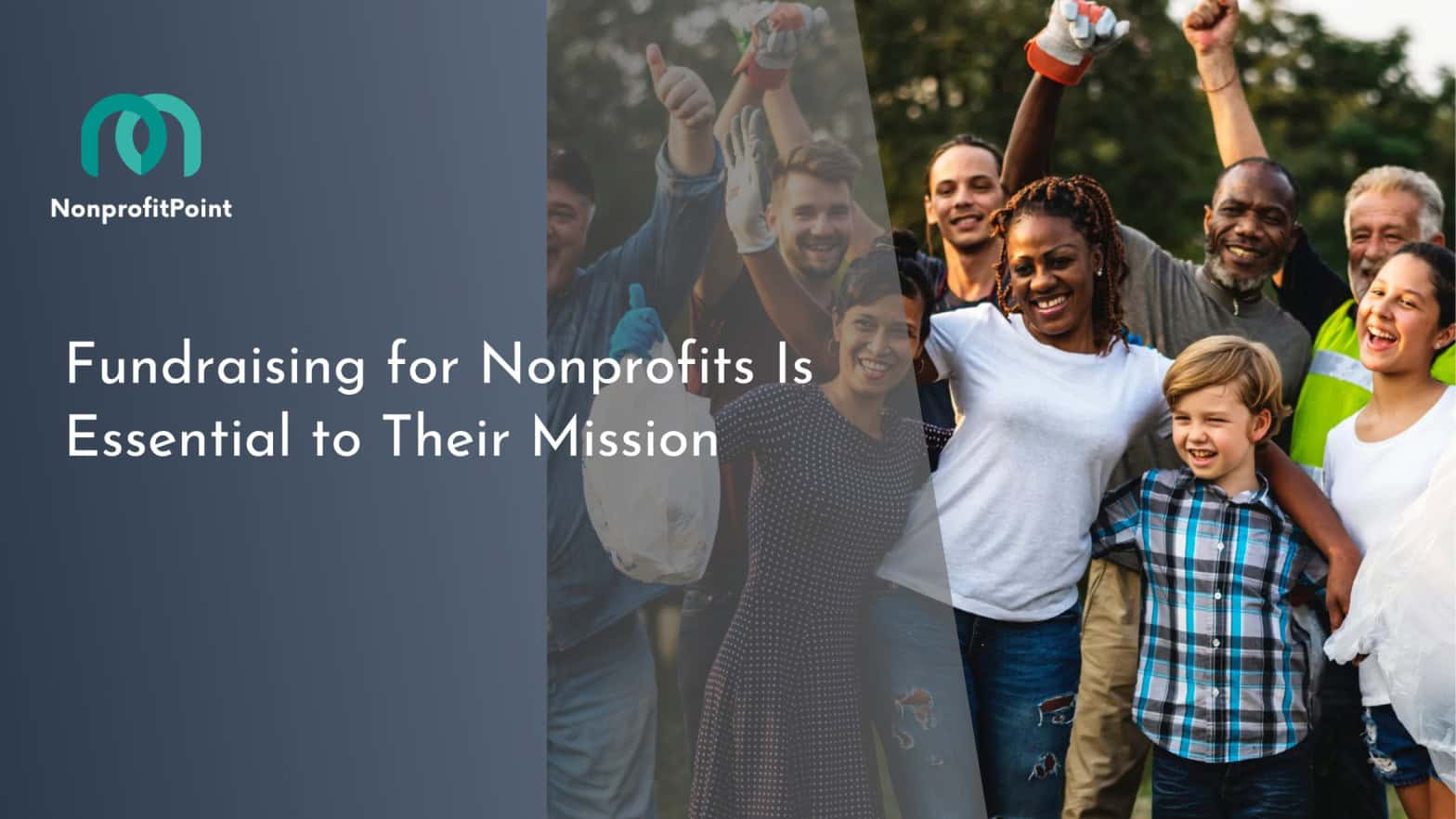
7 Powerful Reasons Fundraising for Nonprofits Is Essential to Their Mission

Editor’s Note — Updated May 2026. Our team reviews nonprofit and fundraising guides quarterly, cross-referencing program details against Charity Navigator, CharityWatch, GuideStar/Candid, and BBB Give.org — and we publish program or naming updates within 7 days of verified changes. Spotted an outdated name or broken link? Email team@nonprofitpoint.com and we’ll correct the record.
Fundraising for nonprofits is one of the most crucial activities that enables these organizations to thrive. It empowers nonprofits to provide critical services and programs such as disaster relief, family counseling, youth employment, and more. In fact, fundraising is not just about collecting donations — it’s a foundational aspect of effective nonprofit management.
It pays for salaries, office expenses, and programs that are needed for their operation. The more money that is raised by a nonprofit the more good they can do with the world. This guide will offer insights into the basics of fundraising and its importance to the overall success of a nonprofit organization.
What Is Nonprofit Fundraising?
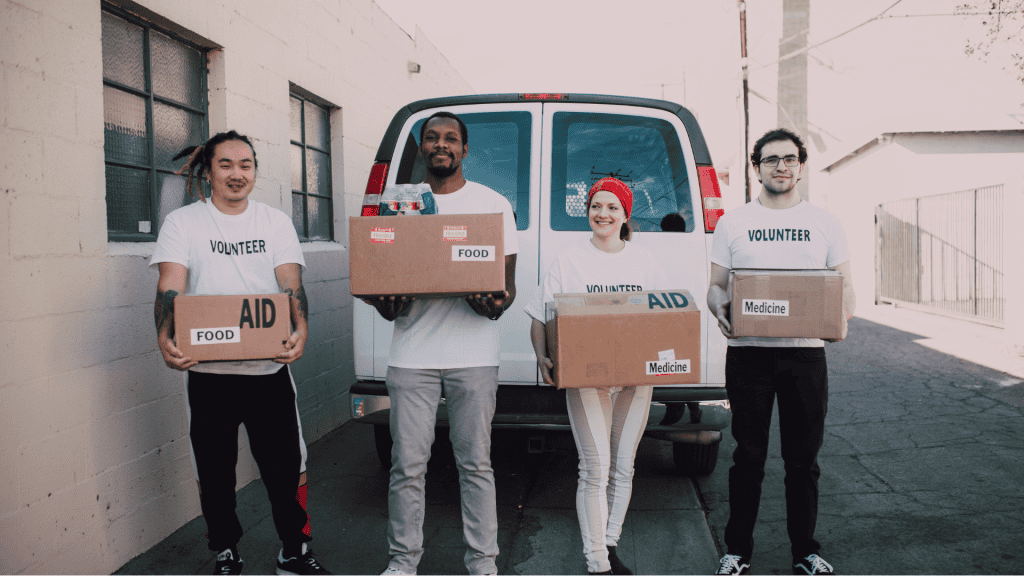
Nonprofit fundraising is the act of soliciting donations from a large group of people with the intention of donating this money to a nonprofit organization.
Fundraising activities include:
- Volunteer recruitment and management
- Social media campaigns
- Event sponsorship
- Soliciting donations from corporations, foundations and individuals
- Online donations
- Nonprofit Grants
- Crowdfunding
Nonprofit fundraising includes many responsibilities that are not just related to sourcing money. For example, fundraising also includes managing donor relationships, managing volunteer efforts and events, and more.
Fundraising should be seen as much more than just the act of soliciting donations. It’s a way to build awareness for your organization while providing resources that will make your organization more effective in achieving its mission.
Why Fundraising is Important for Nonprofits

Nonprofits are, by definition, organizations that provide goods and services for the public good. Nonprofits don’t generate profit to be turned into personal wealth for anyone in the organization. If a nonprofit generates a surplus, it must be put back into the organization or donated to a qualified charitable cause.
Fundraising is an important aspect of nonprofit management. Fundraising enables nonprofits to provide essential services and programs, such as disaster relief, family counseling and youth employment. In order to do this effectively, fundraising must be at the forefront of all non profit efforts.
Without fundraising, a nonprofit can’t function as its primary goal is providing services to those in need. Nonprofits are most often funded by private donations from individuals, corporations, foundations and even governments. These donations enable nonprofits to provide basic necessities and support for those who need it.
7 Reasons Why Fundraising is So Important for Nonprofits:
[lwptoc skipHeadingLevel=”h1,h2,h4,h5,h6″]
1. It pays for salaries, office expenses, and programs
Fundraising helps nonprofits continue their mission even when they are facing financial difficulties. Most nonprofits have a lot of expenses coming in each month, such as salaries for staff members, office rent, utilities, supplies, and other items needed for the operation of the organization.
Sometimes they are not able to cover all of these expenses with the money coming in from donations and grants alone; this is where fundraising comes into play. Fundraising allows them to cover these expenses when needed so that they can continue operating without having to cut back on staff or shut down altogether because of lack of funds.
2. Nonprofits need funds to make a difference in the community.
For a nonprofit, the more funds they have, the better they are able to make an impact in their community. They can develop programs that will help people with what’s going on within society and focus less on money.
3. It provides an opportunity to engage with donors on a personal level
Through this process, nonprofits are able to grow and expand their outreach. Through the emotional connection that donors feel for your cause, they will be more inclined to donate funds in order to support it.
Furthermore, by creating a personal relationship with your donor base you can increase donations because the individuals who give money want opportunities for an increased level of engagement other than just providing financial support on behalf of themselves or their company.
4. Fundraising helps with brand recognition and increase donor loyalty
Fundraising events are one of the most effective ways to recruit donors, supporters, and volunteers. It is through these connections that a nonprofit can increase their brand recognition in an increasingly competitive world as well as develop long-term relationships with people who share similar interests.
Fundraising events are also beneficial because they give nonprofits an opportunity to make sure all aspects of service lines or projects they provide on behalf of the community or cause aligns with donor values so there’s a shared understanding between both parties about what needs to be done for success
5. It creates awareness and interest in the organization’s activities and projects.
It also gives participants the opportunity to make a difference in their community by contributing time and/or money to a good cause. Events help create a sense of community within the organization and it raises morale when employees see that the organization truly cares about its mission. Employees typically value their employer more after being involved with an event, whether as a volunteer or donor.
In addition, fundraising events allow organizations to make valuable connections within the community. They give people the opportunity to work with other businesses, affiliates of different organizations, student groups, and other passionate individuals that are committed to making an impact in the lives of others. These networking opportunities can lead to future partnerships and effective collaboration for larger projects that have the potential to benefit a greater number of people.
6. It allows donors to give back to the community, support a cause that they are passionate about
Whether a donor is an employee, a parent of a student, or even just someone who comes across an organization that they care about, fundraising events offer them an opportunity to stand out from the crowd and make a positive difference.
7. It ensures that donors can see the direct impact of their donations on the organization
Fundraising events provide donors with the opportunity to meet and connect with the organization’s staff, volunteers, and other stakeholders. This allows them to see firsthand how their donations are helping others, which can increase their commitment to the work that they do.
Fundraising also helps organizations distinguish themselves from their competitors through the visibility that they receive at fundraising events. These events allow organizations to reach out to potential donors and supporters in an effective way that can help them grow their donor base over time.
Planning a Successful Fundraising Strategy
It is important to have a strategy in place before you begin to fundraise. Developing a fundraising plan may be easier if you are able to assess the organization’s capacity and readiness for fundraising. This includes assessing available resources, the amount of time to dedicate to fundraising, and whether or not there is a support system in place for the nonprofit.
Asking the big question- what is your goal? What is the fundraising event for? Why should people donate? Is it a campaign or one-time event? These are all questions that need answers before moving forward with your fundraising plan.
For example, if your goal is long-term sustainability, your event would likely be more focused on building relationships with donors than raising money in one day. If you want to raise money quickly and efficiently, then an event that centers on incentives (like prizes) might work better.
Where nonprofit fundraising programs leave the compounding-gift dollars on the table
Nonprofit fundraising programs that clear $50-$200K annually routinely under-monetize the recurring conversion and the small-donor upgrade because they treat the major-gift cycle as the whole program. Layer the calendar with these companion levers and the same supporter list compounds 2-4x more lifetime value without one new big donor:
- Donation jar wording ideas – the event tip jar, the office reception counter, and the lobby giving box capture supporters who already engaged with the mission but never reached the gift form – wording that names a concrete outcome (one meal, one tutoring hour, one rescued animal) lifts physical-jar collection 2-3x over a blank donation box and maps directly into a clean recurring-pitch follow-up.
- Funny ways to ask for donations – humor-anchored asks (director-shaves-the-beard-for-$1,000, board-takes-the-cold-plunge, mystery-program dare jars, biggest-tip-names-the-next-newsletter) lift per-donor giving 30-50% over earnest ‘support the mission’ signs and is the single highest-converting copy lever for general nonprofit fundraising.
- Another name for church fundraisers – the naming-convention swap (calling it a ‘stewardship celebration’ or ‘community harvest’ instead of a ‘fundraiser’) lifts attendance 20-40% in faith-affiliated programs and unlocks audiences that screen out the word ‘fundraiser’ – useful across any nonprofit running parish, fellowship, or interfaith partnerships.
What Type of Fundraising Strategy Should I Use?
There are many ways to raise money for your nonprofit organization.
Some of the most common fundraising strategies include direct mail, phone solicitations, personal appeals, telethons, online donations, crowdfunding, etc.
However, you must find the strategy that best fits your organization’s needs.
For example, if you have a large staff with many volunteers, personal appeals and online donations may be the best way to go. But if you’re a smaller organization with few people on staff and limited volunteers, phone solicitations might be the best strategy for your organization.
Conclusion
Nonprofit organizations rely on fundraising to support their mission and keep their organization running. Although fundraising can be time-consuming and challenging, there are many ways to make it easier. We hope that after reading this article you must have known how crucial fundraising is for your nonprofit.
To get started with online donations, we recommend Donorbox as a go-to fundraising software for accepting donations seamlessly.
Nonprofit Fundraising FAQs
What does a healthy fundraising revenue mix look like for a small or mid-size nonprofit in 2026?
Working benchmark ranges from the 2024-2026 sector data. (1) Small nonprofit ($100K-$500K annual revenue): individual giving 35-55%, foundation grants 15-30%, government grants 0-15%, earned income 5-25%, special events 10-25%, corporate giving 3-10%. (2) Mid-size nonprofit ($500K-$5M annual revenue): individual giving 30-45%, foundation grants 15-30%, government grants 5-20%, earned income 10-30%, special events 8-20%, corporate giving 3-12%. (3) Larger nonprofit ($5M-$50M annual revenue): individual giving 25-40%, foundation grants 12-25%, government grants 10-30%, earned income 15-35%, special events 5-15%, corporate giving 3-15%. The single biggest health indicator isn’t the absolute mix – it’s whether any single revenue source exceeds 35-40% of total revenue, because over-concentration in any one source is the leading predictor of organizational instability when that source contracts. The single most under-developed channel at small and mid-size nonprofits is recurring monthly giving (typically 3-8% of revenue at unoptimized orgs, 15-30% at programs that have built the recurring-giving architecture intentionally). Moving recurring giving from 5% to 20% of total revenue typically doubles or triples organizational resilience to economic downturns.
What are the highest-leverage fundraising channels for a small or mid-size nonprofit in 2026?
Working hierarchy by return-on-effort. (1) Recurring monthly giving program – the single highest-ROI channel in the 2024-2026 window. Moving one-time donors to monthly recurring giving at an 8-15% conversion rate triples or quadruples lifetime donor value because monthly donors give 3-5x more annually and retain at 80-95% versus 30-45% for one-time donors. The technical investment is modest (a Givebutter, Donorbox, Bloomerang, or Classy donation page with monthly as the default option) and the revenue multiplier is structural. (2) Major-donor cultivation pipeline (donors giving $1,000+ per year and $2,500+ in some segments) – typically 1-3% of donors by count but 50-70% of revenue at established orgs. Investment in a half-time or full-time major-gifts officer at the right organization scale typically returns 8-20x in major-donor revenue within 24-36 months. (3) Foundation grants (regional community foundations, family foundations with mission alignment, national funders) – typical conversion 8-15% on well-targeted applications. A consistent quarterly grant-writing rhythm with 4-8 applications per quarter at a mid-size org typically clears $80,000-$400,000 in annual grant revenue. (4) Sustainer-tier corporate sponsorships (a single corporate sponsor at $5,000-$50,000 per year with naming recognition on a program, event, or facility line item) – corporate giving is undergoing a transition from event-sponsorship to year-round program-sponsorship, and orgs that build this model consistently lift corporate revenue 30-80% per year. (5) Annual signature event (gala, golf classic, run/walk, or auction) – high-effort but produces both revenue and community engagement; typical net margin 35-65% of gross, with the biggest events at established orgs netting $150,000-$2,000,000+. The investment-return curve flattens above 2-3 signature events per year, so concentration matters.
What’s the right tech stack and donor-journey design for a small or mid-size nonprofit in 2026?
Working stack at three operating scales. (1) Under $500K annual revenue: Givebutter (free peer-to-peer + donation forms with optional tip-to-cover-fees model that makes the platform free to the org), Mailchimp free tier or Mailerlite free tier, Canva free, Google Workspace for Nonprofits (free for qualifying 501(c)(3)s), basic Donorbox or Givebutter donation form on the website. Total annual tech cost $0-$500. (2) $500K-$2M annual revenue: Bloomerang or Little Green Light CRM ($99-$249/mo), Mailchimp Standard or Klaviyo ($45-$200/mo), Givebutter Plus or Classy basic ($0-$199/mo), Canva Pro, basic SEO tool (free Google Search Console + optional Ahrefs Starter at $99/mo). Total annual tech cost $2,500-$8,000. (3) $2M-$10M annual revenue: Salesforce NPSP or Neon One CRM ($0 with Salesforce Power of Us discount, or $499-$999/mo for Neon One), Klaviyo or Hubspot Marketing Hub ($45-$800/mo), Classy or Funraise ($199-$999/mo), full SEO stack (Ahrefs Standard at $249/mo, Screaming Frog), grant-management tool (GrantHub or Foundant). Total annual tech cost $12,000-$45,000. The structural rule across all three: pick the CRM first and constrain every other tool to integrate with it natively – the cost of poor data integration over 3-5 years exceeds the cost of any individual subscription several times over. The single biggest tech-stack investment with the highest return is data hygiene (deduplication, source-tagging, contact updates) which sounds expensive but is the difference between an org that grows 5% a year and one that grows 20% a year.
What’s the most common mistake small and mid-size nonprofits make with fundraising in 2026?
Over-investing in one-time event-driven revenue and under-investing in the recurring-giving and major-donor cultivation pipelines that produce 70-85% of revenue at the most resilient peer organizations. The failure pattern: a $400,000 nonprofit runs 3-4 signature events per year that produce 55-65% of revenue, has no dedicated major-gifts officer, has under 5% of revenue from recurring monthly giving, and depends on the same 200-300 event-attendee donors year after year. When one bad event year hits (weather cancellation, economic downturn, key staff departure) revenue contracts 25-40% in a single fiscal year and the program is forced into emergency layoffs or program cuts. The fix is to deliberately rebalance over 24-36 months: invest in a half-time or full-time major-gifts officer (typical 1-year payback at 5-8x salary in incremental major-donor revenue), build the recurring-giving program to 15-25% of total revenue through donation-page redesign and a 90-day cultivation series for new donors, and reduce event count from 3-4 to 1-2 high-quality signature events with stronger sponsor underwriting per event. The second-most-common miss is under-segmenting the donor database – sending the same email and direct-mail appeals to every donor regardless of giving capacity, history, or affinity. Segmented major-donor cultivation appeals typically convert at 4-8x the response rate of generic appeals. The third miss: skipping the planned-giving program entirely. Planned giving (bequests, charitable gift annuities, donor-advised fund recommendations) is the single highest-ROI fundraising layer in the 25+ year time horizon and typically returns $25,000-$200,000 per realized bequest at small and mid-size orgs – and 1-3 bequest commitments per 500 donors per year is achievable with a 1-page brochure and an annual planned-giving letter.