9 Fitness Fundraising Ideas You Should Try Today | Nonprofit Point

Editor’s Note — Updated May 2026. Our team reviews nonprofit and fundraising guides quarterly, cross-referencing program details against Charity Navigator, CharityWatch, GuideStar/Candid, and BBB Give.org — and we publish program or naming updates within 7 days of verified changes. Spotted an outdated name or broken link? Email team@nonprofitpoint.com and we’ll correct the record.
As a nonprofit organization, your youth center, youth membership organization, or fitness center is always looking for ways to fund its programs and services. With an increasing number of adults now leading busy, fast-paced lives and heavy reliance on technology to connect with people, we see many people spending less time getting physical.
In fact, according to a study by the CDC National Center for Health Statistics, only about 23% of Americans meet the recommended minimum physical activity guidelines. To help combat this trend, your fitness center or nonprofit can host a fundraiser that supports fitness and wellness.
Since many people are not actively pursuing healthy lifestyles as much as they should be, hosting a fundraiser that revolves around getting fit can help raise some funds for your youth center or organization.
9 fitness fundraiser ideas that you should try today:
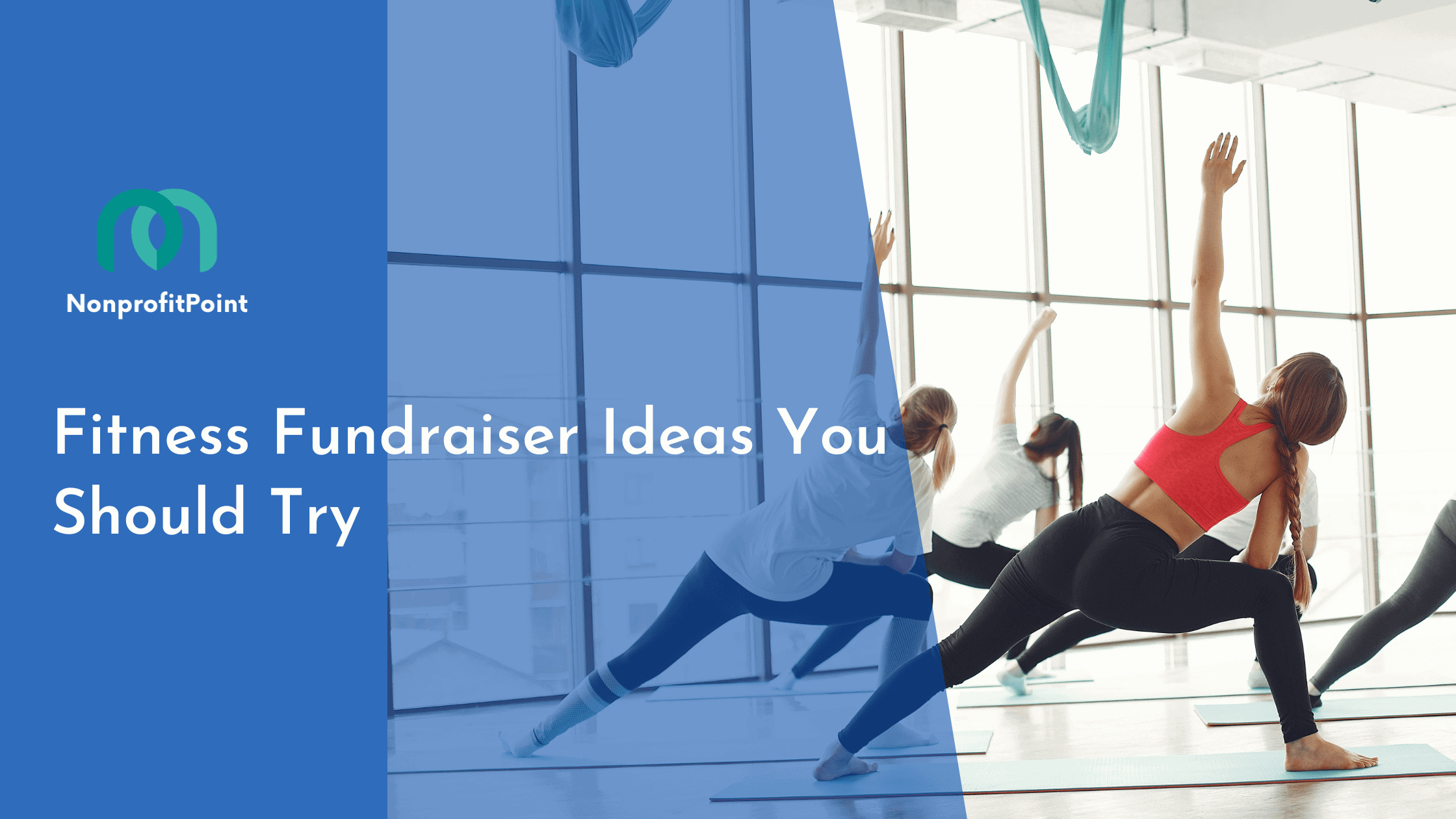
Hold a yoga session

If you want to boost your center’s revenue and support the physical and mental well-being of your participants, consider holding a yoga session at your center.
Yoga is a great way to reduce stress, build strength and flexibility and improve circulation. Plus, yoga is accessible to all ages and fitness levels; you can find poses that are appropriate for all skill sets, even if you’ve never done it before.
Depending on the type of yoga you choose to host, you can charge anywhere from $5 to $20 per person. You can also offer yoga mats and other yoga equipment for sale at your center. If you’re interested in hosting a yoga session at your center, ACE recommends researching your state’s yoga licensure requirements before you begin.
Host an athletic game day
If you have an athletic program at your center, you can host an athletic game day fundraiser. During this event, you can play traditional sports like basketball, soccer, and flag football.
Alternatively, you can also host a sports-themed carnival or game night, where participants play sports-themed games. This game day fundraiser is a great way to celebrate your athletic program and encourage healthy competition among participants.
If you choose to host an athletic game day fundraiser, you’ll want to think about how you’re going to score the games. You can either create your own point system or use a sports-themed card game like UNO or Spoons. Whatever you decide to do, make sure to communicate your rules and scoring to participants ahead of time to avoid confusion during the event.
Host a Fitness Class

Consider hosting a fitness class fundraiser. You can host fitness classes on a wide variety of topics, including yoga, strength training, cardio, Zumba, and more. When planning your fitness class fundraiser, you’ll want to offer your participants a wide variety of class options to accommodate different fitness levels.
If you’d like to host a fitness class fundraiser, consider the following:
- Contact local gyms or fitness studios to see if they’d be willing to donate their space or offer a discounted rate for your class.
- Promote your event in local exercise groups and on popular social media channels. You can even post fliers in nearby gyms and fitness centers.
- Offer an incentive for early registration. This could be a discount on the class or something else of value that participants will want to register early for. Just make sure it’s worth it!
- Perhaps you can offer early registration for a reduced rate, but then raise it at the last minute so that people feel compelled to sign up sooner rather than later. Or, maybe you could offer free childcare during the event so that parents can attend without having to worry about finding a sitter.
Be creative!
You can host your fitness class fundraiser just about anywhere — from local parks, sports facilities, community centers, etc. Just make sure you have permission from the owner of the venue before hosting your event there! You should also ask if there will be any additional fees for using their space beyond basic rental costs. You don’t want any surprises when planning this type of fundraiser!
Hold a Yo-Yo Competition

If you have a competitive edge and a Yo-Yo club at your center, then host a Yo-Yo competition fundraiser. Yo-Yo competitions are a great way to boost your center’s revenue and celebrate Yo-Yo-related activities.
If you decide to host a Yo-Yo competition fundraiser, you’ll want to plan your event in advance and promote it via posters, flyers, and social media. Create a structure for the competition, including how many people will compete in each round and when the event will be held.
Host an Organic Food Dinner
If your center offers a nutrition or cooking education program, try hosting an organic food dinner fundraiser. During this event, you can serve an organic meal (or multiple organic dishes).
You can either host a sit-down dinner or a picnic-style dinner. Hosting an organic food dinner is a great way to promote healthy eating and support local businesses. It’s also a great way to engage your participants in a hands-on activity and promote socialization.
If you decide to host an organic food dinner, plan everything out in advance, including the menu, where you’re going to purchase your food from, and how much it’s going to cost.
Host a 5K Race to Promote Fitness

5K races are a great way to promote fitness, celebrate sports and promote a healthy lifestyle. If you decide to host a 5K race fundraiser, plan your event well in advance.
If you’re interested in hosting a 5K race, you’ll also want to find out what your state’s governing body requires in terms of permits and insurance policies.
You may also want to consult with your city government to make sure that your proposed date and location meet zoning requirements.
Once you have your date booked, start spreading the word to potential runners. You’ll want to let people know where the race starts and ends, as well as any other important details they need to know. If you’re hosting a 5K race to raise money for a particular cause, make sure you publicize that information.
Throw a Gymnastics Fundraiser
If your center offers gymnastics-related activities, consider holding a gymnastics fundraiser. During this event, you can host a gymnastics competition, a gymnastics-themed game night, or even a gymnastics-themed dance-off.
During the gymnastics competition, your team of fundraisers can set up a booth outside of a local event or venue. When people walk past your booth, encourage them to “test your might” by offering them a raffle ticket.
When the event starts, collect raffle tickets from every person who tries a particular physical challenge (such as a handstand, a cartwheel, or a forward roll). The person who collects the most raffle tickets gets to keep all of them
If your center offers Zumba classes, consider holding a Zumba fundraiser. Zumba fundraisers are a great way to celebrate Zumba-related activities and boost your center’s revenue.
You can hold a Zumba fundraiser at your local gym or host it at your center. If you are fundraising at your center, hold a Zumba class and ask people to make a donation. You can also have people make donations in exchange for raffle tickets.
Combine Dance and Fitness for Your Fundraiser
Dance fundraisers are a great way to celebrate dance-related activities and boost your center’s revenue.
These events can be tailored to any age group and can be held at any time of year.
To host a successful dance fundraiser, you will want to start early to promote the event and drum up interest. You will also want to put together a solid team to help with the event and make sure you have everything you need to make it happen.
One of the easiest ways to make a dance fundraiser happen is to sell tickets to a performance by your dance group. This can be something that you have already planned or something that you put together quickly to benefit from the fundraiser.
You can also sell t-shirts or other items with your group’s logo on them to help with your fundraising efforts.
Conclusion
Healthy lifestyles and fitness are key to living a long and fulfilling life. A healthy lifestyle is characterized by a balanced diet and a regular exercise routine. It is important to begin the journey of a healthy lifestyle as soon as possible, as this will help avoid many health issues later in life. There are many ways that you can raise money for your organization through fitness.
From yoga classes to 5K runs, there is a fundraising activity for every type of fitness enthusiast. The best part is that every one of these fundraising events promotes a healthy lifestyle and encourages physical activity, which is great for everyone.
Fitness Fundraiser FAQs
How much can a fitness fundraiser realistically raise per event?
Most fitness fundraisers raise $3,500–$85,000 per event, with the spread driven by event format, participant scale, and whether the program is single-day or campaign-style multi-week. Small community fitness fundraisers (single-gym workout-a-thons, neighborhood 5K runs, single-yoga-studio benefit classes with 40–150 participants) typically net $1,800–$5,500. Mid-tier annual fitness fundraisers (regional 5K and half-marathon races with 350–1,500 registrants at $25–$65 registration plus team-fundraising structure, multi-gym workout challenges, charity yoga festivals at 250–600 attendees) consistently raise $15,500–$48,500. Premium signature fitness fundraisers (major-city marathons and half-marathons with 2,500–15,000+ registrants at $45–$185 registration plus team-fundraising minimums of $1,000–$5,000 per participant, multi-day cycling-and-walking endurance events with 200–800 participants at $2,500–$10,000 fundraising minimums) cleared $185,000–$2.8M+ in our documented examples. The single biggest revenue lever in fitness fundraising is the team-fundraising-minimum model — events with required per-participant fundraising minimums ($500–$5,000 typical) consistently raise 5–15x more than registration-fee-only events because the minimum converts every registrant into an active peer-to-peer fundraiser through their personal network rather than only generating registration-fee revenue.
Which fitness fundraiser formats consistently produce the strongest results?
Five formats consistently outperform across documented fitness fundraisers: (1) 5K and half-marathon races with team-fundraising structure — the dominant fitness-fundraising format, with $25–$85 registration fees plus optional or required team-fundraising commitments ($250–$2,500 per participant typical); raises $4,500–$185,000 with the spread driven by participant scale and team-minimum levels; the highest-performing programs (Susan G. Komen Race for the Cure, Team in Training for Leukemia & Lymphoma Society, Komen 3-Day) consistently produce $1M–$10M+ per regional event through disciplined team-fundraising-minimum structures; (2) cycling fundraisers and multi-day endurance rides — charity cycling events ranging from single-day 25–100 mile rides ($75–$185 registration plus $250–$2,500 fundraising minimum) to multi-day rides of 200–500 miles over 3–7 days ($2,500–$8,500 fundraising minimum) consistently raise $8,500–$2.5M+ per event; AIDS LifeCycle, Pan-Mass Challenge, Bike MS, Ride to Conquer Cancer are the dominant national programs; (3) workout-a-thons and gym-partnership fundraisers — single-gym or multi-gym workout-challenge events (typically 4–24 hour continuous group-fitness programming with $25–$95 registration and per-participant fundraising commitments) consistently raise $3,500–$25,500 per event; CrossFit affiliate charity-workouts (the annual CrossFit Open includes optional charity-fundraiser integration), Orangetheory Fitness charity-class partnerships, and Barry’s charity-class collaborations are common formats; (4) yoga and meditation fundraisers — charity yoga classes at single studios or multi-studio partnerships, charity yoga festivals (typically 3–8 instructor sessions across a day with $25–$85 entry), and donation-based community yoga events; raises $1,500–$22,500 per event with the lower-overhead format particularly effective for smaller nonprofits without infrastructure for larger races; (5) virtual fitness challenges and step-count fundraisers — participants commit to a fitness goal (typically 30–100 mile walking/running totals over 30–60 days, or 100,000–500,000 step counts) and raise pledges from their networks based on goal completion; raises $1,500–$85,000 per campaign with very low operational overhead because the format requires no in-person event infrastructure; the format expanded substantially during pandemic-era programming and has remained as a structural complement to in-person fitness fundraisers. Avoid: launching first-time fitness fundraisers without registration-and-fundraising platforms appropriate for the format (Race Roster, RunSignUp, Classy, and Givebutter all provide integrated registration + team-fundraising functionality), and under-investing in race-day logistics (poor course management, inadequate water stations, slow registration check-in, missing finish-line refreshments are the variables most-correlated with year-over-year participant attrition).
How do we recruit teams and individuals for fitness fundraisers?
Team-and-individual recruitment is the highest-leverage variable in fitness fundraising, and recruitment-funnel discipline determines whether an event hits 200 participants or 2,000. Five operating rules: (1) launch recruitment 12–20 weeks before event date with a structured early-bird-registration discount window (typically 15–25 percent discount on registration fees through 8–12 weeks pre-event, then standard pricing 4–8 weeks pre-event, then late-registration premium pricing in the final 4 weeks); the early-bird structure consistently produces 35–55 percent of total registrations and provides cash-flow visibility for race-day operational planning; (2) build a team-captain recruitment cohort 14–18 weeks pre-event — team captains commit to recruiting 8–25 team members each (depending on event scale), receive captain-toolkit packages with team-recruitment templates, captain-specific fundraising tools, and weekly captain-cohort coordination calls; team captains consistently produce 55–75 percent of total event registrations and 65–85 percent of team-fundraising revenue; (3) partner with corporate teams through workplace-fundraising outreach — corporate teams (typically 8–75 employee-participants) consistently produce $2,500–$45,000 per corporate team through workplace matching-gift programs, employee-engagement budgets, and team-building participation; corporate-team recruitment should begin 16–20 weeks pre-event through HR-and-philanthropy contacts at regional corporations; (4) leverage past-participant alumni networks for year-over-year recurring registration — structured alumni-communication sequences (typically a 6–8 email sequence beginning 16 weeks pre-event with first-look registration, alumni-loyalty discount codes, and team-captain-conversion asks) consistently produce 45–65 percent of recurring registrations; the highest-performing programs maintain 55–75 percent year-over-year alumni-retention rates, while programs without structured alumni outreach typically reset to 20–35 percent year-over-year retention; (5) provide every registered participant with a structured personal-fundraising-page toolkit including pre-written ask templates in 3–5 variations (family ask, friend ask, colleague ask, social-media ask, employer-match ask), pre-designed personal social-media graphics with the participant’s name and goal, weekly progress-tracking dashboard access, and milestone-achievement recognition badges; the participant-toolkit investment consistently produces 35–55 percent higher per-participant fundraising than self-directed-participant fundraising programs. Avoid: launching recruitment less than 10 weeks pre-event (caps participant scale at 35–55 percent of potential), neglecting corporate-team outreach (loses high-value team-captain cohorts), and skipping participant-toolkit distribution (cuts per-participant fundraising 35–55 percent).
How do we structure fitness fundraisers for safety, insurance, and liability?
Fitness fundraisers operate in a regulatory and liability environment where participant injury risk, course-safety protocols, weather contingencies, and insurance requirements significantly affect both operational planning and per-event cost structure. Five operating rules: (1) carry event-specific liability insurance and participant-medical-coverage insurance — standard nonprofit general-liability policies typically do not extend to athletic events without specific endorsements, and event-specific policies (typically $850–$4,500 for community-scale 5K and walking events, $4,500–$22,500 for major races and cycling events, $15,500–$85,000+ for multi-day endurance events) are required by most permit-granting municipalities and athletic-event-management providers; common providers include Sadler Sports Insurance, K&K Insurance, and Beazley specialty markets; (2) require every participant to sign a comprehensive liability-waiver-and-release agreement before participating — the waiver should be reviewed by a sports-law attorney specific to the event jurisdiction and should address assumption-of-risk acknowledgment, medical-emergency consent, photo-and-likeness release, and indemnification provisions; waivers should be executed digitally through the registration platform (Race Roster, RunSignUp, Classy) to ensure documented signature retention; (3) coordinate with local emergency-medical-services providers and have on-site medical coverage proportional to event scale — small 5K events typically require 1–2 on-site medical personnel and a contingency-transport agreement with local EMS, mid-scale events (1,000–5,000 participants) require 4–15 on-site medical personnel and dedicated medical-tent infrastructure, large endurance events (cycling rides, marathons) require integrated medical coverage with mobile units along the course; coordinate with regional EMS 8–16 weeks pre-event; (4) develop a weather-contingency plan with clear decision-trigger criteria (lightning within 6 miles, sustained heat-index above 95F, sustained wind above 25mph for cycling, freezing rain or snow accumulation for road events) and clear communication protocols (participant-text-message systems, race-website status pages, on-site PA-system instructions) — the documented weather-protocol is required by most municipal permit-granting authorities and is the single most-correlated variable with participant-safety outcomes; (5) coordinate with municipal permitting authorities 12–26 weeks pre-event — road-closure permits, park-use permits, special-event-alcohol permits (if applicable), amplified-sound permits, and any health-department food-service permits all require multi-week processing time and frequently require coordination with police, fire, parks-and-recreation, and public-works departments; the municipal-coordination process is the single most-common operational bottleneck and consistently determines whether an event launches on schedule. Avoid: launching without event-specific liability insurance (creates organizational existential risk), skipping participant waiver execution (creates per-participant litigation exposure), and under-coordinating with municipal permitting (creates last-minute event-cancellation risk).