8 Quirky Fundraising Ideas for Nonprofits That Actually Work | 2026 Guide

Editor’s Note — Updated May 2026. Our team reviews nonprofit and fundraising guides quarterly, cross-referencing program details against Charity Navigator, CharityWatch, GuideStar/Candid, and BBB Give.org — and we publish program or naming updates within 7 days of verified changes. Spotted an outdated name or broken link? Email team@nonprofitpoint.com and we’ll correct the record.
There are many challenges that non-profit organizations must face, one of the most pressing being the need for sufficient funding to continue operations. To ensure longevity and sustainability, it is imperative that nonprofit organizations find new ways to generate income beyond typical fundraising efforts like dinners, car washes, and walkathons.
For this reason, brainstorming and implementing creative, quirky fundraising ideas for nonprofits is essential. This blog post will go over some quirky but effective fundraising ideas and alternate methods of raising money that is not directly through donors.
Whether you work with a specific organization or are simply looking to offer your services pro bono in the future, these suggestions may be useful to you moving forward.
8 Quirky, Unique Fundraising Ideas To Try:
Culture Festivals
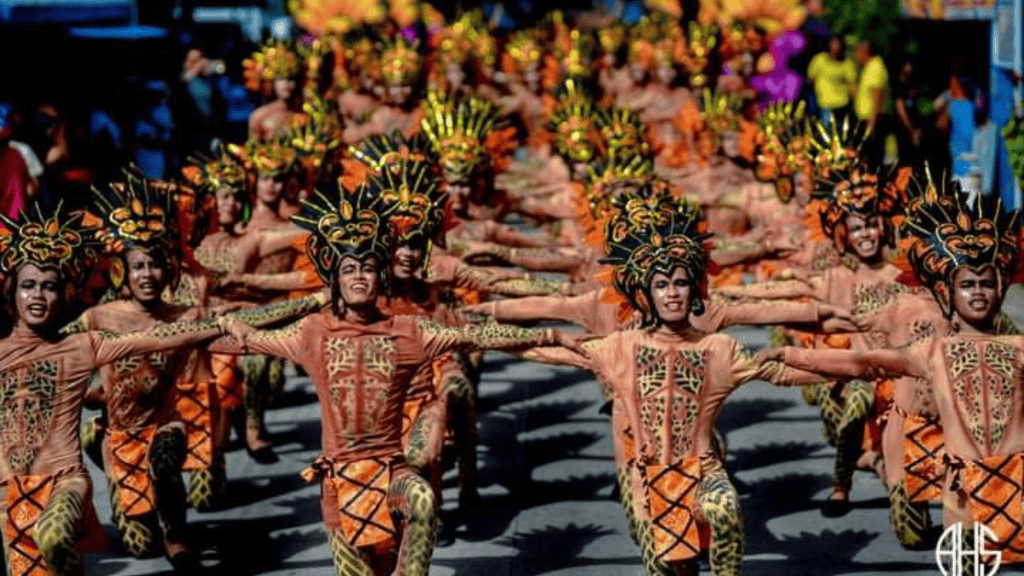
If you live in an area with a preexisting ethnic or cultural population, you may want to consider the implementation of a cultural festival. Some ideas may include an Arab festival for a predominantly Arab neighborhood, a Hispanic Heritage Festival for an area with a large Hispanic population, and so on.
The great thing about these types of fundraising events is that you can cater them to multiple demographics, providing something for everyone. As such, you can expect a large turnout from a diverse participant base.
A cultural festival can be a great fundraising idea for a nonprofit because it will likely draw many attendees. Those attendees will be more willing to donate since they receive something in return.
Museum Sleepover
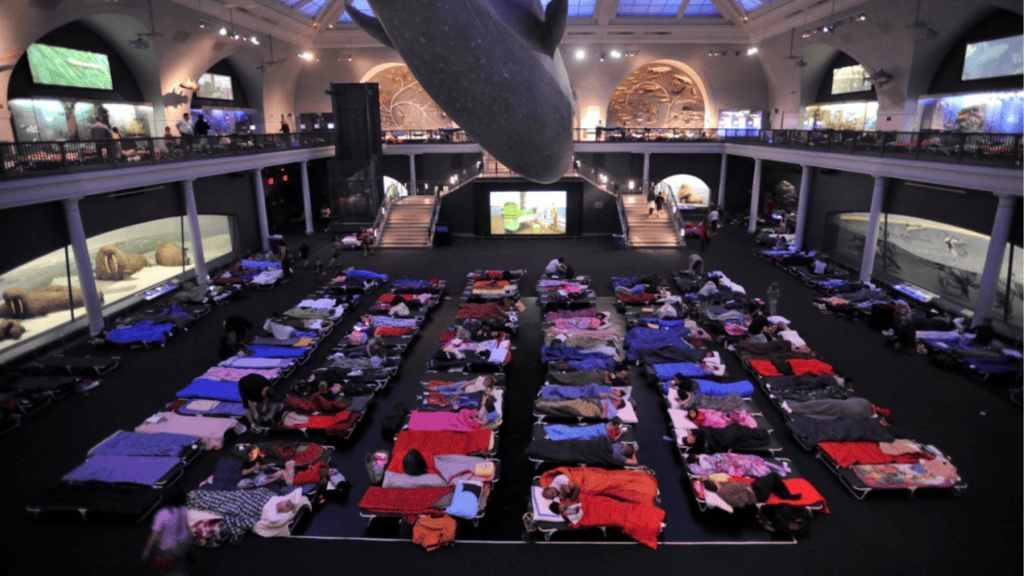
If you have a local museum that you are working with, consider the idea of hosting a fundraising sleepover in the museum. You can charge a small fee to participants, including museum entry, food, drink, and other related items.
This type of fundraising event is great for multiple reasons. First, it provides a unique experience for museum lovers and those interested in the subject matter. Second, it will draw many attendees, particularly if the museum is well-known.
Finally, the entry fee can go toward funding the cause of your choice.
Human Library

Another way to attract attention at a fundraiser or event is to introduce a “human library.” At this station, professionals are available to be “borrowed” for one-on-one discussions with others in the room.
If you would like to pursue this option, you can reach out to local professionals and ask if they would be willing to participate in this event. Ideally, you want to work with those who are passionate about their career and who would be willing to talk about it at length. This event is great for a couple of reasons. For one, it is a very novel idea that will likely draw in many attendees due to its quirkiness.
Secondly, the concept is interactive and allows for an intimate conversation between the borrower and the lender. This is perfect if your nonprofit is looking to make a strong connection with potential donors.
Music Festival Fundraiser
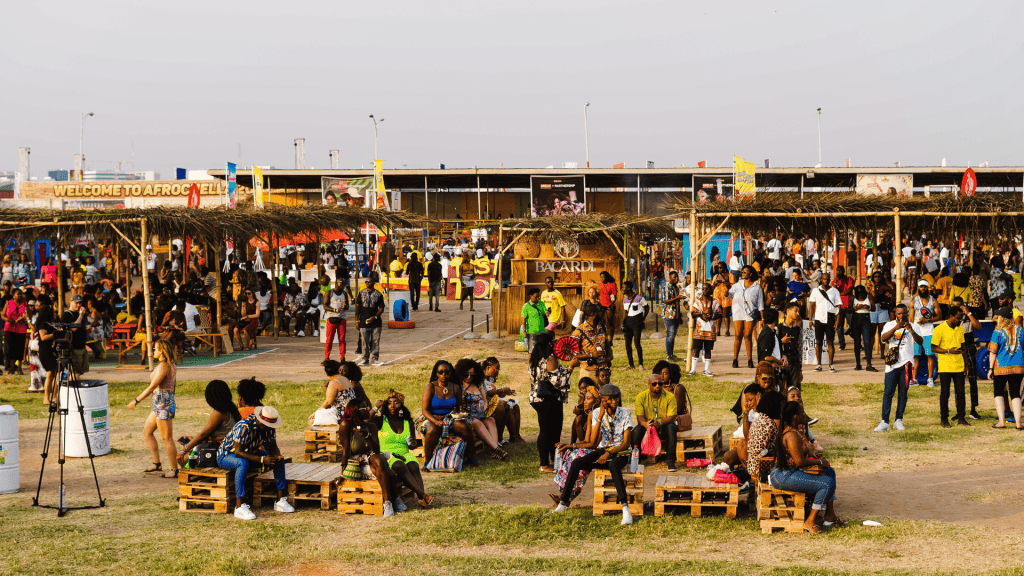
If you are working with a music-related nonprofit, consider hosting a music festival fundraiser. Music festivals are all the hype these days and make for a great fundraising event.
Organizing a music festival is ambitious, but it can be extremely rewarding if done correctly. You will want to ensure you have the funds for such an event ahead of time.
Ideally, you want to attempt to raise the money for the event before you begin planning. Once you have enough funds to ensure the event’s success, you can begin planning. You will want to ensure that you have a wide range of musical acts available to draw in as many people as possible. You also want to make sure that you have enough space to host the event.
Virtual Events
If you are looking to host a fundraiser but don’t have the necessary funds or resources to do so, consider hosting a virtual event. At this event, your nonprofit will likely partner up with another nonprofit or celebrity.
You will likely have a designated time frame when you are accepting donations. This is referred to as running a telethon. You will want to promote your event as much as possible during this time frame. You can do this via social media, on your website, and perhaps even on a local news station.
Once you have finished hosting the virtual event, make sure to tally up the money received and send it to the organization you partnered with.
An Ad Exchange Fundraiser
If you are working with a website, you can use an ad exchange fundraiser to bring in some extra cash. Essentially, you are allowing advertisers to purchase ad space on your website.
Ad exchanges are a fantastic way to increase your monthly income. This is because they do not require you actually to do any work. You simply allow advertisers to place their ads on your website in exchange for a fee.
Sponsored Advertisements
If you are going to use sponsored advertisements to help fund your nonprofit, you will want to make sure that you have a solid plan in place. Ideally, you want multiple advertisers lined up before making any announcements.
Once you have secured your advertisers, you can begin to promote the upcoming advertisements. Make sure to let your audience know that they are receiving the advertisements as thanks for their donations. This is a great way to connect with your donors more personally.
Stipend for Services
If you are working with a nonprofit that does not have a large budget, consider offering your services in exchange for a stipend. Obviously, you want to make sure that the amount you are charging is reasonable and that you can complete the work required of you.
This is a great way to help a nonprofit succeed without placing a financial burden on its shoulders. It also makes you feel like you are making a difference in your community.
Bottom line
It’s important to remember that quirky fundraising ideas are not for everyone and that there is a reason conventional fundraising campaigns are so ubiquitous.
However, there are many benefits to working with a quirky fundraising idea. Of course, they are novel and can be a great conversation starters. On top of that, there are several other advantages associated with these types of fundraisers.
If you are considering engaging in this type of fundraising, take a step back and consider the potential challenges. Then, think about your organization’s strengths and decide whether those strengths make sense for quirky fundraising ideas.
If you decide to go the quirky route, ensure that your donors have plenty of information about the benefits associated with these types of fundraisers. The best way to persuade donors to contribute to your organization is to present them with a compelling case for doing so.
Unique and Quirky Fundraising Ideas FAQs
Why do quirky and unusual fundraising ideas often outperform conventional fundraisers?
Quirky fundraising ideas consistently outperform conventional fundraisers by 25–65 percent on participation-rate and per-event revenue across documented programs, and the structural-advantage drivers are well-understood. Three structural reasons quirky formats outperform: (1) novelty drives social-media shareability and earned-media coverage — quirky fundraisers (toilet-paper-mummy-wrap contests, milk-jug-and-rubber-duck races, bug-eating challenges, beard-shave-offs, unusual food-eating contests, unconventional theme-dress days) generate organic social-media sharing and frequently produce local-news coverage that conventional fundraisers (silent auctions, golf tournaments, gala dinners) cannot match; the earned-media reach typically expands campaign visibility 5–15x beyond paid-marketing reach at zero incremental cost; (2) novelty lowers ask-friction for first-time donors — quirky formats produce ask-conversation entry points that conventional formats cannot generate; the unusual nature of the event becomes the conversation starter and the conversation-driver, which converts cold prospects into engaged participants at 3–5x the rate of conventional-format asks; (3) novelty produces participation rates that conventional formats cannot match — quirky participatory events (jail-and-bail fundraisers, dunk-tank fundraisers, pie-in-the-face fundraisers, unusual-talent-show fundraisers) consistently produce 45–75 percent broad participation versus conventional event 5–25 percent participation; the broader participation base means more sellers, more captains, and more authentic word-of-mouth promotion than conventional formats can produce. Programs that strategically deploy 1–3 quirky formats per year alongside conventional cornerstone events consistently outperform programs that rely exclusively on conventional formats; the format-mix discipline is what separates breakthrough-growth programs from steady-state programs.
What are the most successful quirky fundraiser formats nonprofits actually use?
Five quirky formats consistently produce strong documented results across nonprofit programs: (1) jail-and-bail fundraisers — the format where designated community members (politicians, business leaders, recognized community members) are humorously ‘arrested’ and held in a temporary ‘jail’ (decorated booth, cordoned-off area in a public space) until they raise their ‘bail’ from their personal networks through phone calls and personal asks; raises $4,500–$35,000 per event with the high participation-and-engagement model producing strong community-goodwill alongside fundraising revenue; (2) beard-shave-off and head-shave fundraisers (St. Baldrick’s Foundation is the dominant national program, raising $35M+ annually) — the format where participants commit to shaving their head, beard, or moustache once they reach a personal fundraising goal; raises $1,500–$8,500 per participant with the visual-transformation element producing strong social-media engagement and year-over-year tradition-building; (3) unusual-eating-and-eating-contest fundraisers — pie-eating contests, hot-dog-eating contests, jalapeno-eating contests, unusual-food-tasting events, and adult-spice-and-heat-tolerance competitions with $5–$25 admission, $1–$5 per-contest entry, and concession-and-spectator-engagement revenue; raises $850–$4,500 per event with very low operational overhead; (4) wacky-format athletic events — nontraditional athletic competitions like ladder-golf tournaments, cornhole tournaments, kickball tournaments, dodgeball tournaments, and ultimate-frisbee tournaments with $25–$75 team-entry fees plus concession-and-sponsorship revenue; raises $1,500–$8,500 per event with the participatory-spectacle format particularly effective for community-engagement and year-over-year tradition-building; (5) reverse-raffle-and-reverse-auction fundraisers — the format where instead of conventional raffle-prize-winning, the last-ticket-drawn (or in reverse-auction format, the lowest-bid-after-elimination-rounds) wins a major prize, with all earlier-drawn tickets eliminated; raises $4,500–$28,500 per event with the suspense-and-engagement element producing 35–55 percent higher per-attendee revenue than conventional raffle formats. The format selection should match the organization’s mission tone and community-relationship style — some quirky formats (jail-and-bail, eating contests) work well for community-and-recreation nonprofits but poorly for solemn-mission nonprofits (hospice, grief counseling, end-of-life care).
How do we plan a quirky fundraiser without it becoming chaotic or risky?
Quirky fundraiser planning requires more structural discipline than conventional fundraiser planning, not less, and the planning-discipline determines whether the event produces strong revenue or becomes a community-relationship liability. Five operating rules: (1) clarify the rules, format, and operational mechanics in writing before launch — quirky formats by definition do not follow conventional event-template patterns, so the operational mechanics (how participants register, what they commit to, what counts as completion, how funds are collected and distributed, what happens if weather or other contingencies disrupt the event) must be documented at the planning phase; the documented-mechanics prevent the common scenario where mid-event ambiguity creates participant disputes and community-relationship damage; (2) carry event-specific liability insurance proportional to the participatory-risk profile — conventional event liability policies typically do not extend to unusual-format events without specific endorsements; jail-and-bail events, eating contests (food-allergy and choking-risk exposure), athletic-format events (injury risk), and physical-stunt fundraisers all require event-specific coverage; the insurance investment ($450–$4,500 per event typical) protects both the organization and participating volunteers from per-incident liability exposure; (3) execute participant waiver and consent forms for any event with physical, food-related, or visible-public-element participation — the waivers should address assumption-of-risk acknowledgment, photo-and-likeness release (particularly important for events that produce social-media-shareable visual content), and any specific-risk-category language (food-allergen acknowledgment for eating events, head-shaving consent for beard-shave events); the waivers should be reviewed by a sports-law or event-law attorney specific to the event format; (4) coordinate with local-authority permits if the event involves any public-space use, amplified sound, alcohol service, food service, or large-attendance gathering — the permit process is identical to conventional event-permit processes, but quirky events sometimes trigger additional review because the format-novelty creates uncertainty for permit-granting authorities; allow 8–14 weeks of lead time for permit review; (5) plan for the social-media and community-perception management dimension explicitly — quirky events generate stronger social-media-and-news visibility than conventional events, which means the perception-management stakes are higher; pre-event coordinate with the organization’s communications staff (or designated volunteer-communicator), brief on-event-volunteers on appropriate-content-creation guidance (no embarrassing-participant content without consent, no off-mission content during event programming), and plan a post-event narrative that connects the quirky format to the underlying mission-and-impact story. Avoid: launching quirky events without written mechanics-documentation (creates dispute risk), skipping event-specific liability insurance (creates per-event existential exposure), and ignoring social-media-and-community-perception planning (creates relationship-damage risk that outlasts the event).
How do we balance quirky fundraisers with mission tone and donor expectations?
Mission-tone alignment is the most-common reason quirky fundraisers succeed or fail, and the discipline of matching format to mission determines whether the event strengthens or damages donor and community relationships. Five operating rules: (1) audit the proposed quirky format against the organization’s mission-tone and community-relationship profile before committing to launch — some quirky formats (jail-and-bail, eating contests, beard-shave-offs, wacky-athletic-events) align well with community-recreation, youth-development, sports-and-recreation, and broad-community-services nonprofits; some quirky formats poorly match solemn-mission nonprofits (hospice, grief support, end-of-life care, sexual-assault services, suicide prevention, addiction recovery in many cases); the mission-tone audit prevents the common scenario where format-novelty energy overrides relationship-and-perception planning; (2) confirm board-and-leadership alignment on the format selection before public launch — quirky formats sometimes generate internal-stakeholder disagreement (some board members may view unusual formats as inappropriate, undignified, or off-mission), and pre-launch alignment prevents post-launch board-leadership conflict that can damage organizational unity; the alignment conversation should explicitly address format-tone, social-media-visibility expectations, participant-and-spectator demographic mix, and revenue-and-engagement projections; (3) frame the quirky format publicly through mission-connected narrative — the event publicity, donor communications, and event-day programming should consistently connect the quirky format back to the underlying mission (for example, jail-and-bail events ‘help us rescue families from poverty’ rather than ‘fun day of mock-arresting community leaders’); the mission-framing prevents the perception that the organization has abandoned mission-seriousness; (4) maintain donor-communication continuity with the organization’s broader brand voice during quirky-event programming — donor-facing materials, social-media content, and event-day signage should maintain the organization’s overall voice rather than shifting to a substantially-different tone during the quirky event; the voice-continuity prevents the perception that the organization has two personalities (serious-mission versus comedy-event); (5) measure post-event donor-relationship metrics in addition to revenue — donor-retention, donor-acquisition cost, year-over-year participation, social-media-engagement metrics, and community-sentiment metrics should all inform whether the quirky format becomes a year-over-year recurring event or a one-time experiment; the multi-metric evaluation prevents the common scenario where strong single-event revenue masks underlying donor-relationship damage. Avoid: launching quirky formats that conflict with mission tone (creates donor-and-community relationship damage), skipping board alignment (creates post-event leadership conflict), and measuring only revenue without donor-relationship metrics (loses 15–35 percent of lifetime donor value).