How to Start a Candy Fundraiser in Your School (Step-by-Step)

Editor’s Note — Updated May 2026. Our team reviews nonprofit and fundraising guides quarterly, cross-referencing program details against Charity Navigator, CharityWatch, GuideStar/Candid, and BBB Give.org — and we publish program or naming updates within 7 days of verified changes. Spotted an outdated name or broken link? Email team@nonprofitpoint.com and we’ll correct the record.
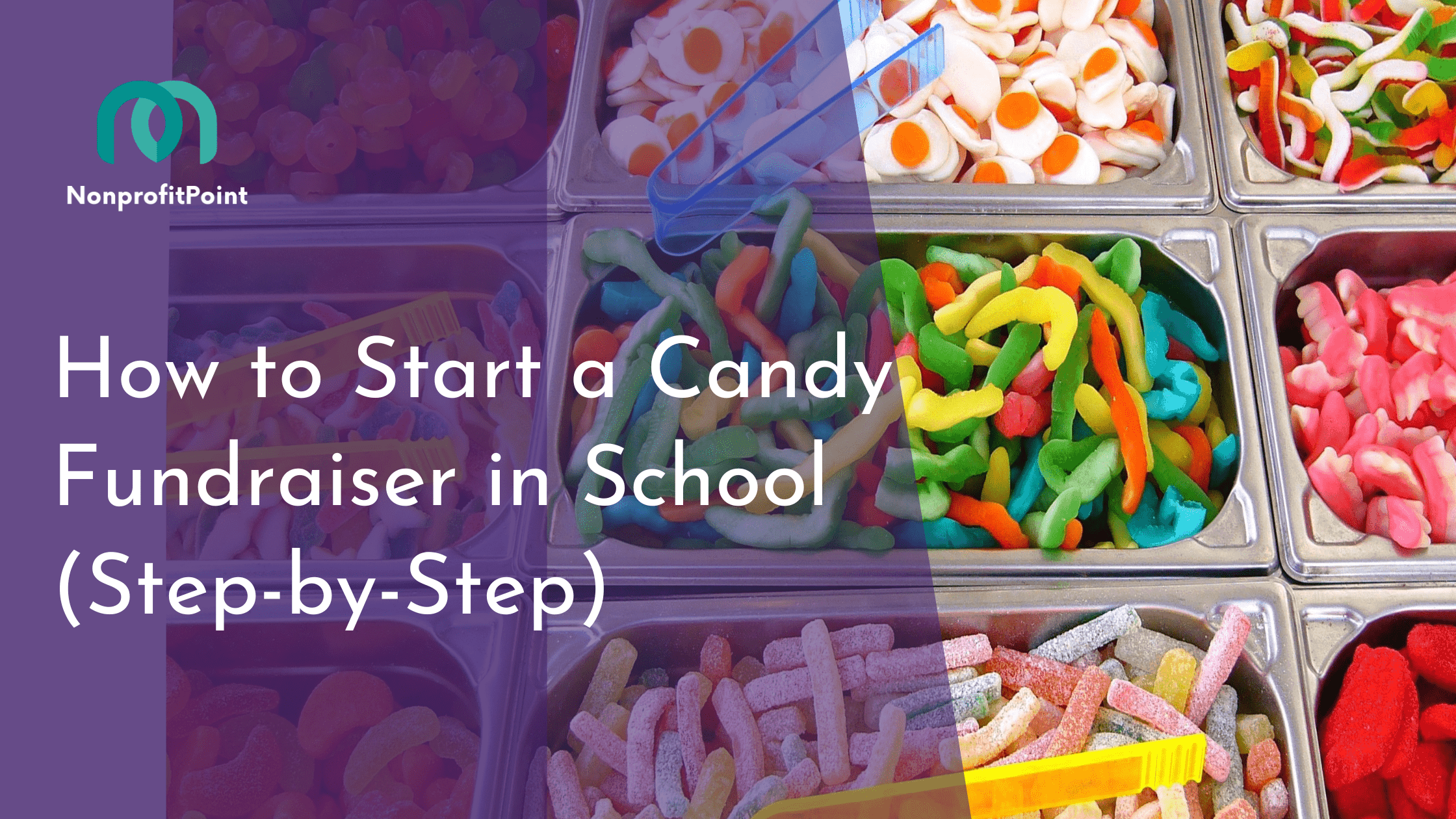
Candy is a universal favorite, especially around the holidays. Kids love it; parents love to give it as gifts, and teachers always look for new ideas for classroom fund-raisers.
Candy is also cheap and easy to store, label and package. If you’re looking for new ideas for your school fundraiser or PTA fundraiser, a candy fundraiser might just be what you need. Starting a candy fundraiser at home or in your school is easy with these tips on how to get started with a candy fundraiser.
Here’s how to get started with a candy fundraiser for your school:
Choose your candy
When choosing your candy, keep in mind the age range of your audience. If you’re doing a fundraiser for a school, you’ll want to select candies that are appropriate for school-aged children, so avoid anything that includes alcohol or other adult ingredients.
You’ll also want to ensure you’re selecting appropriate candies for the time of year. If you’re doing a fundraiser in the fall, selecting candies with pumpkin spice or apple flavors is appropriate.
You can select candies with tropical flavors like coconut, pineapple, and suntan lotion in the spring and summer months. If you’re doing a fundraiser for your own family or a local organization, you can select candies with any flavors or ingredients you’d like. You can also select different types of candies.
You might choose a mix of different types of candy bars, a combination of hard and soft candies, or a mix of both.
Set a fundraising goal

Before you start your candy fundraiser, you’ll want to set a fundraising goal. You’ll also want to determine how much candy you need to purchase for the fundraiser. If you plan to sell your candy for $1 per piece and you want to sell a minimum of 500 pieces, you’ll need $500 worth of candy.
If you sell your candy for $0.50 per piece and you want to sell the same amount, you’ll need $750 worth of candy. You can do fundraisers with any amount of candy, but the higher the price, the more profit you can earn. You’ll also want to remember that the higher your price, the less likely your customers will buy your product.
So plan your fundraising and pricing accordingly.
Know your audience

Knowing your audience will make it easier to choose the correct candy. If your audience is primarily children, you’ll want to select candies that are appropriate for their age range.
If your audience is mostly adults, you’ll want to avoid candies with a lot of sugar and choose something lower in calories. If you’re doing a fundraiser for a charity, you’ll also want to select candies that are appropriate for the charity’s mission.
Candy that’s kosher or vegan is also a great choice for a charity that has specific dietary requirements.
Check your school’s fundraising Requirement
It’s important to make sure your school’s fundraising requirements allow you to sell candy. Some schools may only allow you to sell specific types of candy.
Your school may also require you to purchase your candy from a specific vendor. If your school has fundraising requirements, read and follow them carefully.
It’s always good to adhere to your school guidelines and do fundraising as per their regulations.
Decide on your packaging

Your packaging is usually what will make or break your candy sale. You’ll want to make sure customers are drawn to your candy, so they’ll purchase it. You can do this by choosing colorful candy packaging with eye-catching designs.
You’ll also want to ensure the packaging is resealable and easy to open. If you’re packaging your candy in bags, you’ll want to seal the bags so customers can easily open them and eat the candy without getting their hands messy.
You can also package your candy in bulk, which is especially great for teachers who want to hand out candy to their students. Make sure your candy packaging is resealable so it stays fresh for a long time and is easy to open.
Create a Game Plan

Once you’ve chosen your candy and are ready to start your candy fundraiser, you’ll want to create a game plan. Before you start selling your candy, make sure you’ve ordered everything you need, from the candy to your packaging.
Also, make sure you have a place to store your candy until you’re ready to sell it. If you’re doing a school fundraiser, schedule your fundraiser with the right people at the right time.
Create your ad and plan your campaign
You can use an online ad generator to create a quick and easy ad. Make sure you include your pricing, a description of your product, and information on how to purchase your product.
You can post your ad on social media, your website, or other online ad sites. You can also print out flyers and post them in shops, libraries, and other public places.
Make sure you have a plan for when your campaign ends. You’ll want to have enough candy stocked to last until your campaign ends. If you run out of candy before your campaign ends, you’ll have no way to make money.
Wrapping it up
Candy is a universal favorite, especially around the holidays. Kids love it; parents love to give it as gifts, and teachers always look for new ideas for classroom fund-raisers.
Candy is also cheap and easy to store, label and package. If you’re looking for new ideas for your school fundraiser or PTA fundraiser, a candy fundraiser might just be what you need. We hope that starting a candy fundraiser at home or in your school is easy with these tips on getting started with a candy fundraiser.
Candy Fundraisers for Schools FAQs
How much can a school candy fundraiser realistically raise per campaign?
Most school candy fundraisers raise $1,500–$22,000 per campaign, with the spread driven by enrollment scale, vendor-margin selection, and whether the program is single-classroom, grade-level, or school-wide. Small single-classroom and single-club candy campaigns (15–45 sellers, 2–3 week sale window, single product line) typically net $850–$3,800. Mid-tier grade-level and school-wide candy programs (75–300 sellers, 3–5 week sale window, multi-product catalog with chocolate bars, lollipops, and seasonal gummy product lines) consistently raise $5,500–$15,000. Premium district-wide and large-PTO candy programs (350–1,500 sellers, 4–6 week sale window, premium catalog including World's Finest Chocolate, See's Candies fundraising, Hershey's, and seasonal-themed candy collections) cleared $25,000–$95,000 in our documented examples. The single biggest revenue lever is vendor-margin selection — school-fundraising candy-vendor margins range from 40 percent (commodity-tier candy at $1–$2 unit retail with $0.60–$1.20 vendor cost) to 55 percent (premium chocolate-bar programs at $1–$2 retail with World's Finest, See's, and Hershey's wholesale-fundraiser pricing). Choose vendors offering 50–55 percent margin over 40 percent margin programs, because the 10–15 percentage-point margin gap translates directly to 25–38 percent more net revenue with the same seller effort.
Which candy vendors and product formats work best for school fundraisers?
Five vendor-and-product formats consistently outperform across documented school candy fundraisers: (1) chocolate-bar boxes from World's Finest Chocolate, Van Wyk Chocolate, and similar fundraiser-specialty vendors — the standard 60-bar carrier-box format at $1–$2 per bar with 50 percent organization margin produces $30–$60 per box and consistently produces the highest per-seller revenue ($90–$240 average sale per seller across 3–4 boxes) because the unit-price discipline supports impulse-purchase conversion; (2) See's Candies fundraising programs — partnerships with See's Candies fundraising division offering brand-recognition advantage (See's carries 100+ year California-and-West-Coast brand reputation) with 30–40 percent organization margin on $20–$45 retail boxed-chocolate product; lower margin than commodity-bar programs but higher per-unit revenue and stronger gift-purchase positioning during November-February holiday windows; (3) full-catalog candy programs from QSP (Quality Service Programs), Believe Kids, and similar K-12-school-fundraiser specialists — multi-page catalog format (typically 24–48 pages with 60–150 SKUs covering chocolate bars, gummy candy, lollipops, holiday-themed candy, sugar-free options, and bundled-gift-candy packages) with 40–50 percent organization margin; the multi-product structure expands per-buyer purchase quantity to $25–$85 average order; (4) lollipop and individual-wrapped-candy programs — Dum-Dums fundraising packs, See's Lollypops, candy-cane seasonal programs at $0.25–$1.50 per unit with 50–60 percent organization margin; particularly effective for elementary-school younger-seller cohorts because the lower unit-price and individually-wrapped format aligns with younger-buyer cash budgets and lunch-area sale points; (5) seasonal-themed candy collection programs — Valentine's Day chocolate-heart programs, Easter chocolate-bunny programs, Halloween candy-bag programs, and Christmas-stocking candy programs leveraging holiday-specific buying demand; seasonal collections consistently produce 35–65 percent higher per-seller revenue during peak-holiday windows because gift-purchase use case expands per-buyer purchase quantity. Avoid: low-margin vendors (under 45 percent), single-product programs at single price point (caps per-seller revenue), launching candy campaigns during peak summer heat months June-August in non-air-conditioned distribution scenarios (chocolate melting risk creates customer satisfaction failures), and short-window campaigns under 2 weeks (caps per-seller revenue at 35–55 percent of potential).
How do we handle health, allergen, and school-policy compliance for candy fundraisers?
Health-and-policy compliance is the operational variable that determines whether a candy fundraiser launches successfully or stalls under school-administrator review, and many K-12 districts now restrict on-campus candy sales under federal Smart Snacks in School nutrition standards. Five operating rules: (1) confirm school-district food-policy compliance before campaign launch — the USDA Smart Snacks in School standards (effective July 2014, codified in 7 CFR 210.11) restrict on-campus food sales during the school day from midnight to 30 minutes after the end of the school day; most traditional candy products do NOT meet Smart Snacks requirements (calorie, sugar, fat, and sodium thresholds), so candy-fundraiser sales typically must be structured as off-campus take-home programs (candy taken home and resold to family and personal network) rather than on-campus during-school-day point-of-sale; up-to-10-fundraiser-day-per-school-year exemption applies in many states but check state-specific rules; (2) document allergen content for every candy product on order forms and product-distribution materials — standard candy-allergen disclosure should address tree-nuts (in many chocolate products), peanuts (in many chocolate products, peanut-butter cups, peanut-butter crackers), dairy (in milk chocolate and most cream-filled chocolates), soy (in chocolate emulsifier ingredients), wheat (in some bar products with wafer or biscuit), and egg (in some specialty chocolate products), with explicit cross-contamination disclosure for facilities that produce multiple-allergen products on shared equipment; the allergen disclosure protects against severe-allergy customer-health risk and legal-liability exposure; (3) plan storage and distribution logistics with temperature-control coordination — chocolate products are sensitive to temperature variation (storage above 75-degree-Fahrenheit creates chocolate-bloom and texture-degradation risk, storage above 85-degree-Fahrenheit creates melting risk), so storage-and-distribution logistics should include climate-controlled storage space, temperature-monitored vendor-delivery scheduling (avoid mid-summer outdoor-truck delivery without temperature-controlled transport), and rapid distribution-to-seller turnaround (typically within 7–14 days of vendor delivery); (4) offer dietary-restriction accommodation options where the vendor catalog supports them — sugar-free candy options for diabetic customers, nut-free candy options for severe-nut-allergy customers, and gluten-free candy options for celiac-and-gluten-intolerance customers; the accommodation programming captures customer segments that conventional-only programs miss; (5) plan for the unsold-or-returned-product scenario — vendor return-policies typically allow 5–15 percent unsold-product return at end-of-campaign with full credit (varies by vendor and program), but late returns past the vendor return-window become unsalvageable-cost; the close-of-campaign return-process should be planned at campaign-launch with clear seller-deadline communication for unsold-product return-to-organization. Avoid: launching on-campus candy fundraisers without Smart Snacks compliance review (creates district-policy violation risk), missing allergen disclosure (creates severe-allergy customer-health risk and legal exposure), skipping temperature-controlled storage coordination during summer months (creates chocolate-bloom and melting product-loss), and missing vendor-return-policy planning (creates 5–15 percent unsalvageable-cost overhang).
How do we organize seller motivation, prize programs, and end-of-campaign close?
Seller-motivation and prize-program structure is the operational variable most-correlated with per-seller revenue outcomes because student-seller cohorts respond predictably to structured-incentive programming. Five operating rules: (1) build a tiered prize program aligned with seller-revenue tiers — standard tier structures include level-1 (sell 1–5 units, small-trinket prize like a pencil-pouch or sticker pack), level-2 (sell 6–15 units, mid-tier prize like an inflatable-toy or small-electronics-accessory), level-3 (sell 16–35 units, larger prize like a sports-equipment item or themed-gift card), level-4 (sell 36–75 units, premium prize like a quality-electronics-accessory or activity-pass), and level-5 (sell 76+ units, top-tier prize like a gaming-accessory, tech device, or family-experience pass); the tier-structure consistently produces 35–65 percent higher per-seller revenue than flat-effort campaigns because the tier-progression creates compounding-incentive motivation; (2) layer top-seller recognition programs on top of the tier-prize structure — top-1-seller recognition (typically a large premium-prize like a tablet, bike, or experience-day), top-5-seller recognition (additional premium-prize like a mid-tier electronics item), top-10-percent-seller recognition (special-acknowledgment plus mid-tier prize), and class-or-grade-level-leader recognition (acknowledgment plus pizza-party or activity-event for the winning class); the layered-recognition consistently produces 25–45 percent higher participation from the top-quartile seller cohort that produces the majority of campaign revenue; (3) plan kickoff-event launch programming with structured-distribution and explicit-goal communication — the kickoff event distributes order forms, samples, and parent-communication materials, explains the program (vendor selection, margin structure, organization revenue goal, individual seller goals, prize-program tier structure, sale-window timing, payment-collection and order-fulfillment procedures), and triggers immediate first-day sales momentum through in-meeting peer-energy; the kickoff-event launch consistently produces 35–55 percent higher per-seller revenue than mail-it-home-and-hope programs; (4) execute structured weekly-progress communication throughout the campaign — weekly leaderboard updates, class-or-grade-level-progress communication, top-seller recognition acknowledgment, milestone-celebration content (first $1,000, halfway-to-goal, final-week countdown), and parent-communication about seller progress; the engagement cadence prevents the common pattern where seller-cohorts commit at launch then fade after week 2; (5) plan a structured end-of-campaign close with payment-reconciliation, product-distribution, and recognition-and-celebration programming — the close-process should include order-aggregation deadline (typically 3–5 days after sale-end with no late-order exceptions), payment-reconciliation across all seller-collected orders, vendor-order-submission within the vendor-required deadline, product-distribution logistics (sorting received vendor inventory by seller, distributing sorted orders to sellers, managing seller-to-customer delivery), prize-program fulfillment, top-seller-recognition event, and organization-thank-you-and-impact communication to all parents-and-sellers. The structured close-process protects 15–35 percent of revenue that typically evaporates in poorly-managed close-process programs through uncollected-payment leakage, product-distribution chaos, and prize-program follow-through failures. Avoid: flat-effort campaigns without tier-prize structure (loses 35–65 percent of per-seller revenue), missing top-seller recognition programming (loses 25–45 percent of top-quartile seller revenue), skipping kickoff-event launch (loses 35–55 percent of per-seller revenue), and disorganized close-process (loses 15–35 percent of revenue to payment-reconciliation leakage).