Fundraising Ideas for Nonprofits: 10 Proven Ways to Engage Small Donors

Editor’s Note — Updated May 2026. Our team reviews nonprofit and fundraising guides quarterly, cross-referencing program details against Charity Navigator, CharityWatch, GuideStar/Candid, and BBB Give.org — and we publish program or naming updates within 7 days of verified changes. Spotted an outdated name or broken link? Email team@nonprofitpoint.com and we’ll correct the record.
10 Creative Fundraising Ideas for Nonprofits Relying on Small Donors | Proven Results!
Introduction:
Fundraising ideas for nonprofits that rely on small donors are essential for sustaining impact. With donor retention rates declining, nonprofits must adopt innovative fundraising strategies to stay competitive. However, engaging small donors can be challenging—donor retention rates have dropped by 4.2% across nonprofits, with first-time donor retention at just 19%. For nonprofits that rely on smaller contributions, innovative strategies are key to standing out and fostering donor loyalty.
In this guide, we’ll share fundraising ideas for nonprofits that are proven to work, that rely on small donors. With practical tips, real-world statistics, and proven methods, this guide will help your nonprofit not only survive but thrive in a competitive fundraising landscape. Looking for personalized help?
Explore impactful solutions here.
Fundraising Ideas for Nonprofits: 10 Proven Strategies
1. Community-Focused Fundraising Events
Community-driven events foster connection and goodwill while encouraging donations. These events are cost-effective and easy to execute, making them ideal for nonprofits with tight budgets.
Proven Ideas and Results:
| Event Type | Example & Results | Suggested Ticket Price |
|---|---|---|
| Pancake Breakfast | A local nonprofit raised $5,000 in one morning by hosting a $15-per-ticket pancake breakfast. | $10–$15 |
| Community Yard Sale | A school foundation raised $3,200 by encouraging supporters to donate items for resale. | Free entry + donations |
| Park Concert | Partnering with local musicians, one nonprofit generated $8,000 by charging $20 per ticket. | $20–$50 |
Tip: Maximize results by partnering with community groups like schools or local businesses to reduce event costs and attract more attendees.

2. Peer-to-Peer Fundraising Campaigns
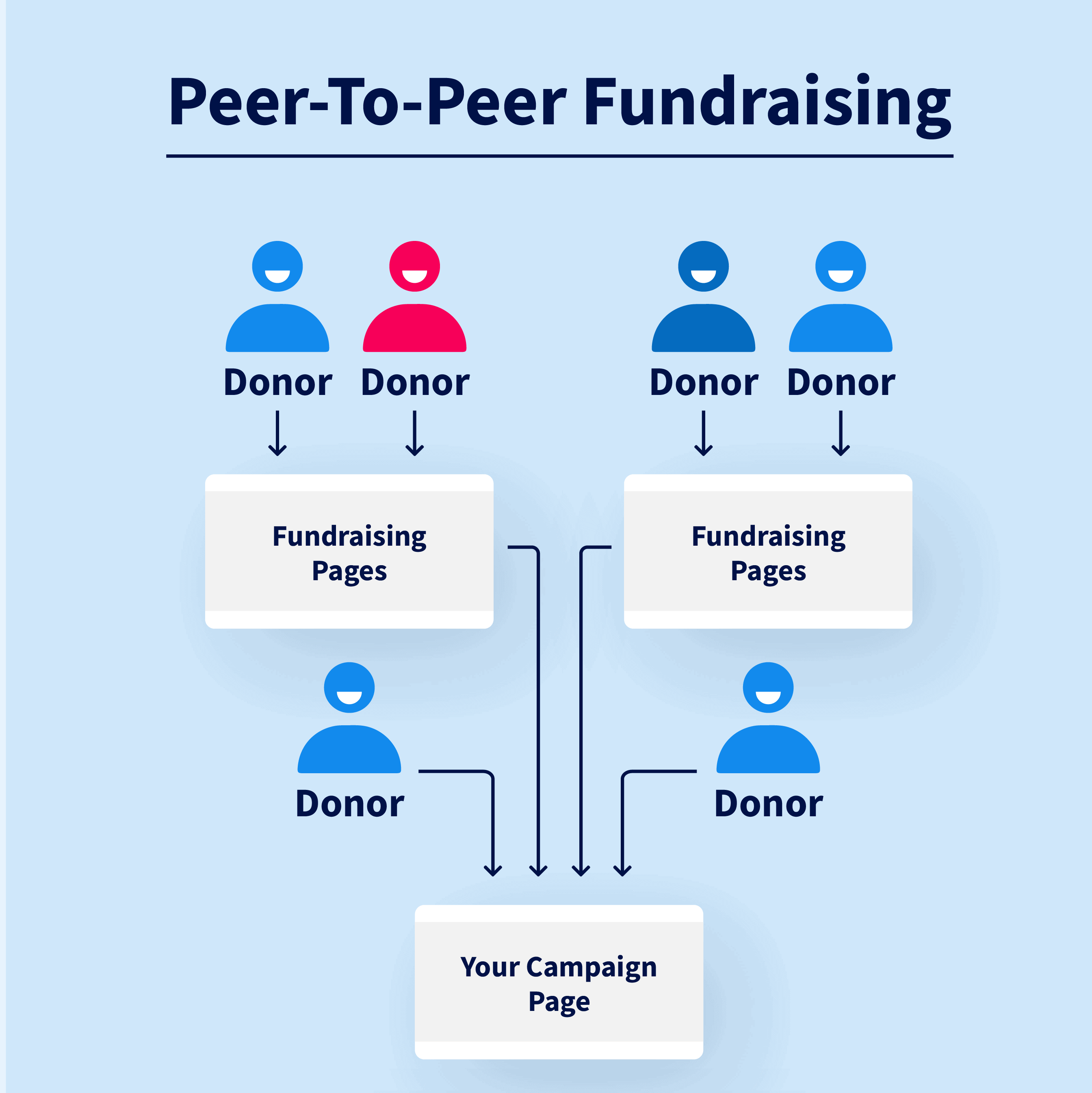
Peer-to-peer fundraising taps into your supporters’ networks, allowing them to raise money on your behalf. This strategy empowers supporters while exponentially increasing your reach.
Real-World Results:
- Nonprofits that use peer-to-peer fundraising see an average ROI of 5:1, meaning every dollar spent on the campaign generates $5 in donations.
- A small nonprofit using a peer-to-peer walkathon raised $25,000 in one weekend, with participants raising funds online via personal donation pages.
Steps to Launch:
- Choose an event (e.g., walkathon, trivia night).
- Provide easy-to-use platforms like Classy or Donorbox for participants.
- Offer incentives like free merchandise for top fundraisers.
Looking to scale your campaigns? Discover ideas to elevate your efforts here.
3. ocial Media Fundraising Ideas for Nonprofits
Social media is a powerful tool for engaging younger audiences and creating viral campaigns. Social challenges, when combined with small donation asks, can have massive results.
Case Study:
The ALS Ice Bucket Challenge raised $115 million in just 8 weeks, demonstrating the potential of social media-based fundraising.
Steps to Create Your Own Challenge:
- Choose a fun, simple task (e.g., share a personal story, complete a 1-mile walk, or perform a dance).
- Use a branded hashtag (e.g., #RunForChange).
- Encourage participants to donate and tag their friends to participate.
Bonus Tip: Use Instagram or TikTok to amplify your challenge’s visibility. Partner with influencers or community leaders to reach wider audiences.
4. Low-Cost Raffle Campaigns
Raffles are a simple yet effective way to raise money from small donors while building excitement.
Proven Success:
- A small community nonprofit raised $6,000 in one weekend by raffling off local business services, with tickets priced at $5 each.
- A healthcare nonprofit secured 30% more donors during a raffle campaign by offering prizes like free spa packages or exclusive restaurant experiences.
Cost-Effective Prize Ideas:
| Prize Option | How to Source Prizes | Cost to Nonprofit |
|---|---|---|
| VIP Tickets to Events | Partner with local event organizers. | Free |
| Gift Cards | Ask restaurants or shops to donate. | Free |
| Handmade Art | Request donations from local artists. | Free or <$50 |
Pro Tip: Use platforms like RallyUp to run online raffles for broader reach.
5. Virtual Auctions & Online Fundraising
Virtual events are cost-efficient and accessible, making them perfect for nonprofits with small donor bases.
Why It Works:
- Online auctions eliminate venue costs and allow participation from anywhere.
- One nonprofit raised $15,000 in a virtual auction by offering exclusive experiences like behind-the-scenes tours and virtual meet-and-greets.
How to Execute:
- Secure high-value auction items (e.g., art, VIP tickets, professional services).
- Use platforms like Charity Auctions Today or Handbid for easy online bidding.
- Promote the event via email, social media, and newsletters.
Quick Tip: Highlight your cause during the auction to inspire generous bids. Learn how to create impactful virtual campaigns here.
6. Monthly Giving: A Sustainable Fundraising Idea for Nonprofits
Donors who give monthly contribute 440% more over their lifetime than one-time donors, making recurring giving programs essential for nonprofits.
Success Example:
A small animal rescue increased their recurring donor base by 35% in one year by offering exclusive perks to monthly givers, such as updates and behind-the-scenes videos.
How to Implement:
- Use tools like Donorbox or Givebutter to automate recurring donations.
- Create a “Giving Circle” program with perks like personalized thank-you notes or exclusive events.
Pro Tip: Promote recurring giving during donation campaigns by showing its impact (e.g., “$25/month feeds a family of 4”).
7. Local Business Partnerships
Collaborating with local businesses is a win-win: nonprofits gain support, while businesses build goodwill and reach new customers.
Impactful Partnership Examples:
| Partnership Idea | Example | Outcome |
|---|---|---|
| Round-Up Campaign | Local stores asked customers to “round up” purchases for charity. | $10,000 raised in 3 months |
| Restaurant Fundraisers | A pizzeria donated 15% of sales on a dedicated night to a local nonprofit. | $5,000 raised |
| Co-Branded Merchandise | A nonprofit collaborated with a boutique to sell co-branded tote bags. | Increased awareness |
8. Creative Product Sales
Selling products is a great way to raise funds while promoting your nonprofit. Branded merchandise creates visibility and encourages recurring donations.
Top-Selling Ideas:
| Product | Cost to Produce | Average Selling Price | ROI |
|---|---|---|---|
| Branded T-Shirts | $5–$10/unit | $20–$30 | High |
| Reusable Water Bottles | $3–$5/unit | $10–$20 | Moderate |
| Holiday Ornaments | $2–$4/unit | $10–$15 | High |
Pro Tip: Use print-on-demand services to minimize upfront costs.
9. Seasonal Campaigns
Seasonal campaigns tap into holiday generosity and help nonprofits stand out during high-donation periods.
Examples by Season:
| Season | Campaign Idea | Results Example |
|---|---|---|
| Spring | Community Garden Day | Raised $4,500 through entry fees. |
| Summer | Ice Cream Social | Generated $6,000 in ticket sales. |
| Fall | Pumpkin Patch Fundraiser | Brought in $10,000 in one weekend. |
| Winter | Gift Wrapping Service | Earned $3,500 during the holiday season. |

Where small-donor programs leave the recurring-gift conversion on the table
Small-donor fundraisers (under-$25 gifts, micro-pledges, $5-$10 jars) clear the front-door but routinely under-monetize the recurring conversion because they treat the first $5 as the goal instead of the doorway. Pair the micro-ask with these companion levers and the same 1,000 small-donor list compounds 2–4x more lifetime value:
- How to ask for donations — the post-first-gift email and the 90-day welcome series is what separates a $5K small-donor program from a $30K one — these scripts cover the thank-you-and-upgrade ask, the recurring-gift conversion offer, and the year-end matching pitch that turns one-time $5 donors into $10/mo recurring supporters.
- Donation jar wording ideas — the micro-ask jar copy is the highest-converting small-donor surface — wording that says ‘we’ll fund one meal for $3’ or ‘cover one tutoring hour for $7’ converts at 3–5x baseline jar rates and feeds a clean recurring-pitch story for the follow-up email.
- Birthday fundraiser wording examples — the birthday-fundraiser format is the highest-converting small-donor channel on Facebook and Instagram and consistently outperforms paid ads on $/gift basis — these wording templates cover the mission frame, the suggested-amount anchor, and the share-back copy that makes a $5 birthday gift compound into a 10-friend cascade.
10. Engaging Email Campaigns
Email campaigns remain one of the most effective ways to engage donors.
Results to Expect:
- Nonprofits see an average ROI of $36 for every $1 spent on email marketing.
- Personalized emails increase donation rates by 26%.
Email Campaign Tips:
- Segment your audience based on donation history or interests.
- Use dynamic subject lines like “See how your $10 can save a life!”
- Include a clear call-to-action with an easy donation link.
Conclusion:
Relying on small donors doesn’t mean you can’t achieve big results. By implementing these 10 creative fundraising ideas, you can increase donations, improve donor engagement, and maximize your nonprofit’s impact.
For nonprofits seeking tailored strategies, visit here to explore tools and solutions that can elevate your efforts. Start today and make your mission a reality!
Creative Fundraising Ideas for Small Donors FAQs
What does a ‘small donor’ actually mean in 2026, and why does the segment matter?
Working definition in the 2024-2026 fundraising landscape: a ‘small donor’ is typically defined as anyone giving $1-$250 in a single year, with the median small-donor gift across the U.S. nonprofit sector around $50-$75 in 2026. The segment matters because (1) it’s the largest donor segment by count – typically 70-90% of an organization’s donor base by donor count, even though it represents only 15-35% of revenue at established orgs; (2) it’s the structural pipeline to mid-level ($250-$2,500) and major ($2,500+) giving – roughly 8-15% of small donors will graduate to mid-level within 24-36 months if cultivated, and 1-3% will eventually reach major-donor status; (3) it’s the most recurring-giving-convertible segment – small donors convert to monthly recurring at 5-12% rates when offered the option at the gift-completion screen, and a converted small donor’s lifetime value is typically 4-8x a one-time small donor; (4) it’s increasingly the political and reputational base of the org – small donors share more, advocate more, and act more frequently than major donors do on a per-capita basis. Programs that under-invest in small-donor cultivation in favor of major-donor focus tend to have higher revenue concentration and lower resilience when a single major-donor relationship ends.
What are the highest-leverage creative ideas for small-donor giving in 2026?
Programs that work reliably across nonprofit sectors in the 2024-2026 window. (1) Round-up-the-change programs through PayPal Charitable, Visa Donate-the-Change, RoundUp App, ChangeUp, or Donate the Change – donors authorize automatic rounding-up of credit/debit purchases to the nearest dollar, with the cents going to your org. Typical donor adds $15-$45 per month in change roundups, which is high-retention recurring revenue. (2) Pinterest-driven Instagram and TikTok micro-donation campaigns where short-form video drives traffic to a Givebutter or Donorbox page with a $5-$25 ‘micro-gift’ as the primary CTA – small-creator nonprofits commonly clear $4,000-$30,000 on a single 30-day micro-campaign with no paid promotion. (3) Birthday-fundraiser activation through Facebook and Instagram – your existing supporters create a birthday fundraiser benefiting your org, average raise per birthday fundraiser is $150-$400, and a 1,000-supporter base typically generates 30-80 birthday fundraisers per year = $4,500-$32,000 in net new revenue. (4) Subscription-merchandise programs ($5-$15/mo for a sticker pack, monthly newsletter PDF, members-only podcast) – the merchandise hook converts small donors to recurring at 2-3x the rate of a pure-donation recurring ask because the supporter receives something tangible. (5) Workplace giving and payroll deduction through Benevity, PayPal Giving Fund, America’s Charities, and similar – very small per-gift amounts ($5-$25/month) but extremely high retention (typically 85-95%) and lower acquisition cost than direct asks.
What’s the right tech stack and donor-journey design for a small-donor program in 2026?
Working stack that performs across most organizations under $5M annual revenue. (1) Donation page optimized for mobile-first giving – mobile is 60-75% of small-donor traffic in 2026 – with Apple Pay, Google Pay, PayPal, Venmo, and ACH bank-transfer options. The presence of Apple/Google Pay alone typically lifts mobile conversion 15-30%. (2) Tip-to-cover-fees model where the donor can optionally cover the 2.5-3.5% payment-processing fee on top of their gift – this single feature typically lifts net revenue 8-15% with zero impact on conversion rate. (3) Monthly recurring giving as the default option on the donation form (with one-time as an opt-out) – this single design change typically lifts recurring-giving conversion 30-60%. (4) Suggested-amount tiers anchored to specific program outcomes (‘$15 funds a backpack for one student’; ‘$50 funds school supplies for a classroom for a month’) – tied giving converts at 20-40% higher rates than untied giving at the small-donor tier. (5) Post-gift donor journey: immediate thank-you email within 60 seconds, hand-signed thank-you letter within 7 days for any gift $25+, a 90-day onboarding email series telling the impact story, and a 12-month renewal ask timed to the original gift anniversary. Programs that build the full journey retain small donors at 35-55% year-over-year versus 18-25% for programs running only a transactional thank-you receipt.
What’s the most common mistake nonprofits make with small-donor fundraising in 2026?
Treating small donors as a transactional revenue stream rather than as the structural pipeline to mid-level and major giving. The failure pattern: a nonprofit acquires 1,200 small donors per year at a $55 average gift ($66,000 in gross revenue), sends each donor a transactional thank-you receipt, doesn’t onboard them with an impact story or invite them to recurring giving, and watches 80% lapse before the 12-month renewal ask – effectively buying 240 net new active donors per year at whatever the acquisition cost was. The fix is to engineer the small-donor experience to convert 8-15% to recurring monthly giving (4-8x lifetime value), 20-30% to renew their second annual gift, and 8-15% to graduate to the mid-level tier ($250-$2,500) within 24-36 months. Programs that build this conversion architecture see the same 1,200 new small donors generate $250,000-$500,000 in lifetime value versus the $66,000 the transactional model captures – a 4-7x revenue multiplier from the same acquisition channel. The second-most-common miss is under-investing in the second-gift ask in the 60 days after the first gift – the single biggest predictor of a small donor’s 36-month lifetime value is whether they make a second gift in the first year, and that depends almost entirely on whether they were asked promptly and personally. The third miss: skipping the small-donor segment in major-donor capacity research because the database queries filter to giving above a threshold – in fact, 8-12% of small donors have major-donor wealth capacity and simply haven’t been cultivated to it yet. Annual capacity screening of the small-donor file commonly identifies 10-50 hidden major-gift prospects per 1,000 small donors.