9 Creative Swim-a-Thon Fundraiser Ideas to Boost Participation and Donations

Editor’s Note — Updated May 2026. Our team reviews nonprofit and fundraising guides quarterly, cross-referencing program details against Charity Navigator, CharityWatch, GuideStar/Candid, and BBB Give.org — and we publish program or naming updates within 7 days of verified changes. Spotted an outdated name or broken link? Email team@nonprofitpoint.com and we’ll correct the record.
Swim-a-thon fundraiser ideas are a fantastic way to combine fun, fitness, and community spirit to raise money for your cause. Whether you’re supporting a swim team, school, or local nonprofit, these events can be both engaging and profitable. With a little creativity and strategic planning, your next swim-a-thon can become a memorable success. In this post, we’ll explore 9 creative swim-a-thon fundraiser ideas to help you maximize participation and donations.
These ideas will take your swim-a-thon to the next level and ensure a successful and profitable event, from creative pool obstacles and games to fun team challenges. With these ideas, you can create a unique and entertaining experience that your participants and sponsors will never forget. So, get your swimwear ready and dive into these 9 creative swim-a-thon ideas!
9 Creative Swim-a-Thon ideas for your next fundraiser:
1. Creative Pool Obstacles

If you’ve held a swim-a-thon before, you know that the most popular obstacle is the relay swim. This is where all of the participants race each other underwater from one end of the pool to the other. While this is undoubtedly fun and exciting, it can get slightly stale after a few years. If you want to shake things up and switch things up a little, you can create a few additional creative pool obstacles.
For example, you can add a few floating or underwater obstacle courses that participants can navigate. Or, you can create a few pool games that all participants can play. For example, you can create a “pooh” game where participants try to throw a toy ball into a bucket while sitting on their underwater.
A few obstacles or games like these can help liven up the event and keep things interesting for everyone. They can also be fun for sponsors to watch and participate in.
2. Team Challenges

Another great way to mix things up during your swim-a-thon is to incorporate team challenges. This can be done in a few ways. First, you can host a team relay. Each team competes against the other in a relay race with this challenge. The first team to finish the race wins. You can also choose a different challenge for each team.
For example, each team can be assigned a different speaker. The team can then select one of its members to speak during the event. This can be a challenge where all speeches are related to your organization and its mission. While these challenges are a fantastic way to get your team members involved, they’re also a great way to involve your sponsors as well.
By choosing team challenges that are specific and relevant to each sponsor, you can help engage them in the event. This can help them get to know your organization better and can also help you receive sponsorship from them.
Schedule a free consultation with a nonprofit video expert
At Happy Productions, we help nonprofits use video to create volunteer spotlights
Schedule Free Consultation →3. Pool Games

Another way to incorporate team challenges into your swim-a-thon is by hosting a few pool games. These games can be fun for participants and sponsors alike and are a great way to add some lightheartedness to the event.
You can choose any game that you’d like. Some great options include a dunk tank, a waterslide, or an inflatable obstacle course. These games can help break up the event and make the swim-a-thon a little more entertaining.
They can also allow your sponsors to participate in the event and engage with the participants.
4. Unique Swag Ideas
One of the most important aspects of any event is the swag. Swag is what participants take home with them after the event. It is often a tangible reminder of the event and what the organization is all about.
At the same time, it is a gift to acknowledge the participants’ efforts. It is also something that your organization can charge sponsors a fee to purchase. There are many unique and creative ways to present swag at a swim-a-thon. There are many different types of t-shirts you can give away to participants.
You can also give away different types of clothing, like hats or towels. You can also present a different type of gift for each participant. This can be anything from a small token or souvenir to a coupon for a free meal at a local restaurant.
There are a lot of different options for swag at a swim-a-thon. This is a fantastic way to thank participants for their efforts and to help them remember the event.
5. Sponsor Challenges
One of the best ways to get sponsors involved at a swim-a-thon is to challenge them. Challenges are a great way to get sponsors engaged in the event and help you to receive sponsorship from them.
There are a few different types of challenges you can host. You can assign each sponsor a different team and have them compete against one another in a relay race. You can also assign each sponsor a different event-related activity to complete.
For example, a sponsor can make a large balloon animal for the participants to play with. Another option is to assign each sponsor an individual challenge. This can be anything from climbing a certain number of stairs to eating a specific number of hot dogs.
6. Host a Poolside Movie Night
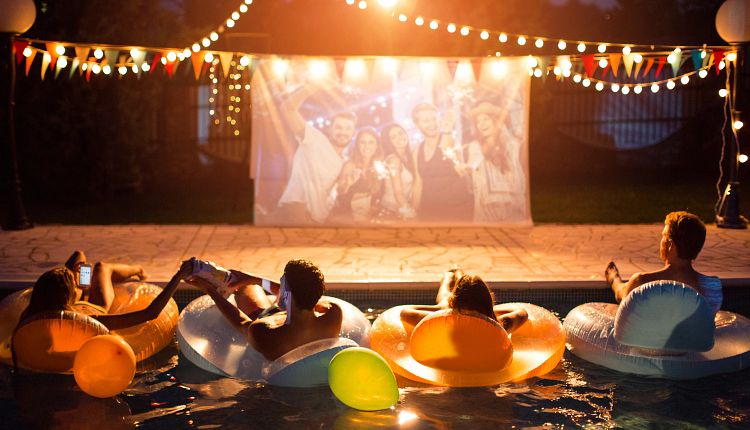
Another fun event that you can host during your swim-a-thon is a poolside movie night. This is a great way to get participants and sponsors together for some fun and friendly competition. You can host a movie night where each team competes against each other in a friendly movie trivia contest. You can also choose a different contest for each team.
For example, you can have each team compete against each other in a trivia contest related to the specific movie being shown. While these are fun ways to get participants and sponsors together, they also help raise money for your organization.
You can host a movie night where participants can purchase a set number of tickets to enter. Proceeds from the movie tickets can then go toward your organization.
7. After-Party Activities
After your swim-a-thon, you can host an after-party at the pool or nearby. This is a great way to get everyone together and celebrate the event’s success. At the after-party, you can host a few different activities. You can play a fun game like trivia or a few other games that participants can engage in together.
Another idea is to host a dance party. This is a great way to celebrate the event’s success with your participants. It is also a great way to engage sponsors in the party and make them feel more like a part of the event. You can also host a photo booth at the after-party.
This is a great way to capture event memories and help participants remember the day.
8. Sponsorship Opportunities
As we’ve discussed, one of the best ways to engage your sponsors at a swim-a-thon is to challenge them. Another great way to engage your sponsors is to offer opportunities for them to sponsor the event and the organization.
Sponsorship opportunities are a great way for your sponsors to get involved in the event and help you raise money for your organization. You can ask each sponsor for a set amount of money. You can also ask each sponsor to provide a specific item or gift. For example, you can ask a sports drink company to provide sports drinks for the event guests. You can also ask a local restaurant to provide lunch for the event guests.
You can provide sponsorship opportunities to help your sponsors get involved in the event and the organization.
9. Food and Refreshments
While you don’t want your swim-a-thon to be all about drinking and eating, you want to provide refreshments for your guests. This is a great way to be hospitable and helpful while raising money for your organization. You can host a food and drink event before the swim-a-thon begins.
This is a great way to feed your participants before participating in the event. It is also a great way to allow sponsors to get to know your organization a little better before the event begins. You can also provide food and drinks during the event.
This is a great way to provide some light snacks and drinks to your participants during their break. It is also a great way to raise money for your organization.
Some tips while organizing a swim-a-thon:
- Start by setting a clear fundraising goal and determining the length of the swim-a-thon event.
- Create a registration system for participants to sign up and collect pledges.
- Promote the event through social media, email, and local newspapers.
- Reach out to local businesses and organizations to sponsor the event or donate prizes for participants.
- Recruit volunteers to help with registration, timing, and overall event coordination.
- Set up a system for tracking pledges and donations, and provide regular updates to participants and sponsors.
- Make sure to have a safety plan in place, and ensure that all participants know the rules and guidelines for the event.
- Have a goodie bag or a prize for the participants and acknowledge the top fundraisers.
- Have a plan in case of bad weather.
- Finally, have fun and enjoy the event! Swimming can be a great way to bring people together for a good cause.
Conclusion
In conclusion, a swim-a-thon is a unique and fun idea for your next fundraiser. Not only will it bring the community together for a good cause, but it also promotes fitness and healthy living. With proper planning and execution, a swim-a-thon can be a successful and rewarding event for all involved.
Don’t be afraid to think outside the box and devise creative ways to fundraise. Happy swimming!
Swim-A-Thon Fundraiser FAQs
How much can a swim-a-thon realistically raise in 2026?
Working benchmarks by team size and pledge structure. (1) Small recreational or summer-league swim-a-thon (40-100 swimmers, $50-$150 in average pledges per swimmer, half-day event): $2,500-$15,000 net. (2) Mid-size USA Swimming club or YMCA swim-team swim-a-thon (100-300 swimmers, $150-$400 average pledges per swimmer, full meet-style event with sponsor lap recognition): $15,000-$120,000 net. (3) Large competitive club swim-a-thon (300-800 swimmers, $300-$1,000 average pledges, multi-day event with corporate sponsorships, alumni outreach, and digital pledge platforms): $90,000-$800,000 net. The single biggest revenue lever isn’t the per-lap pledge amount – it’s the percentage of swimmers who actually collect from their pledged sponsors after the event. Programs running a single ‘collect later’ flow commonly see 50-65% pledge-fulfillment; programs running an upfront pledge-via-credit-card flow through Swim-A-Thon-specific platforms (TeamUnify TouchPad, MyOwnSwimMeet, Givebutter peer-to-peer, Donorbox peer-to-peer) commonly see 88-96% fulfillment. The conversion difference is typically a 1.5-2x multiplier on the same swimmer effort. Always anchor pledges to lap totals rather than time totals – lap-anchored pledges are more concrete for sponsors and convert at higher per-pledge dollar amounts than time-anchored ones.
What are the highest-leverage pledge mechanics and side-revenue add-ons for a swim-a-thon?
Programs that consistently clear $50,000+ on the same swimmer count. (1) Per-lap pledge with a flat-amount fallback – every sponsor commits either ‘X cents per lap up to a cap’ or ‘a flat donation’ before the swim, with the platform auto-calculating the final per-lap total based on laps actually completed. Lap caps protect sponsors from runaway gifts and lift conversion 20-35% over uncapped pledges. (2) Sponsor recognition tiers tied to total swimmer pledges – $50, $100, $250, $500, $1,000 thresholds with branded t-shirts, lap-counter recognition, and prize-tier eligibility. Tiered recognition typically lifts average per-swimmer pledges 40-80%. (3) Per-lap sponsor underwriting where local businesses commit $50-$500 per lap completed by the team’s top swimmer or by a named relay group (‘the first 100 laps sponsored by Smith Family Dentistry’). 4-12 sponsors at this layer commonly clears $2,000-$15,000 in pre-event revenue. (4) Spectator concessions at 65-80% margin (bottled water, sports drinks, granola bars, hot dogs, branded swim caps): $400-$3,500 net. (5) Branded swim-a-thon merchandise (t-shirts, towels, water bottles, cap covers) sold to swimmers and family supporters at 35-50% margin: $800-$8,000 net. (6) Optional VIP swimmer experiences – $25-$75 add-ons for personalized lap-counter recognition, post-event team photo with the coach, or a swim-a-thon highlight video. Programs that layer four or more side-revenue elements typically lift total net 60-150% over pledge-only programs.
What’s the right structure for the swim-a-thon event itself, from kickoff to lap-count to thank-you?
Working playbook from clubs that retain 70%+ swimmer participation year-over-year. (1) Pre-event (3-6 weeks out) – choose a single swim-a-thon platform (USA Swimming Foundation’s Swim-A-Thon official program is the gold standard for competitive clubs; TeamUnify TouchPad and Givebutter peer-to-peer work for smaller programs), open online pledge collection 4-5 weeks before the swim date, recruit a swim-a-thon committee of 3-6 parent volunteers, and run a 30-minute swimmer-kickoff event where the head coach explains the cause and the pledge mechanics. The kickoff event itself is the #1 lever – swimmers whose coach explained the cause in person clear 2-3x the pledge totals of swimmers who learned about the swim-a-thon only by email. (2) Pledge-collection window – 3-4 weeks is the sweet spot; longer windows produce participation fatigue and shorter windows under-collect from sponsors. Mid-window incentive checkpoint at week 2 (a small prize for the first swimmer to reach $250 in pledges; a class-vs-class or age-group-vs-age-group competition leaderboard). (3) Event day – target 1.5-2 hours of actual swimming with structured rest breaks; lap targets in the 100-200 range for younger swimmers and 200-400 range for competitive swimmers. Always have a lap-counter volunteer per 4-6 swimmers; counting errors are the #1 sponsor-trust issue. (4) Post-event – within 7 days send each swimmer’s sponsors a personalized email or letter with the swimmer’s name, lap total, total dollars raised, and what the funds will fund; programs that close this loop see 30-50% sponsor-renewal year-over-year versus 10-15% for programs that send only a generic ‘thanks’ email. (5) Alumni outreach – the highest-margin layer at established clubs is alumni who swam at the program decades ago. A 1-page printed appeal mailed 4-6 weeks before the event commonly converts 5-12% of contacted alumni to a $100-$2,500 contribution.
What’s the most common mistake clubs make with swim-a-thons in 2026?
Treating the swim-a-thon as a one-day event rather than a 6-8 week fundraising campaign with the swim itself as the celebration moment. The failure pattern: a club picks a swim date 3 weeks out, runs a single email to parents asking them to ‘gather pledges’ with no platform, no kickoff, and no incentive structure, holds the swim on the chosen date, and nets $4,000 against a $20,000 goal – then concludes ‘parents weren’t into it this year.’ The fix is to engineer the full 6-8 week campaign: pledge platform live 4-6 weeks before the swim date, a kickoff event for swimmers where the coach explains the cause, midpoint incentive checkpoints, peer-to-peer fundraising features that let swimmers post their personalized pledge page on social media, sponsor-recognition tiers, sponsor-underwriting outreach to local businesses, alumni mail outreach 4-6 weeks before, and a tight thank-you protocol post-event. The same swim-team scale that produces $4,000 with the one-day model commonly produces $30,000-$80,000 with the full-campaign model. The second-most-common miss is not running the swim-a-thon through a payment-processing platform that auto-charges sponsors at the end – the ‘collect later’ model loses 35-50% of pledged dollars to forgotten or evaded follow-through, and the difference between pledged dollars and collected dollars is where most swim-a-thons quietly underperform. The third miss: pricing the suggested pledge floor too low (‘any amount counts!’) – a swim-a-thon with a suggested $1 per lap floor and a $25 minimum total commonly outperforms a ‘whatever you can give’ framing by 50-100% because the suggested floor anchors the sponsor’s mental math at a higher number.