9 Innovative Fundraising Ideas for Wrestling Teams (With Tips)

Editor’s Note — Updated May 2026. Our team reviews nonprofit and fundraising guides quarterly, cross-referencing program details against Charity Navigator, CharityWatch, GuideStar/Candid, and BBB Give.org — and we publish program or naming updates within 7 days of verified changes. Spotted an outdated name or broken link? Email team@nonprofitpoint.com and we’ll correct the record.
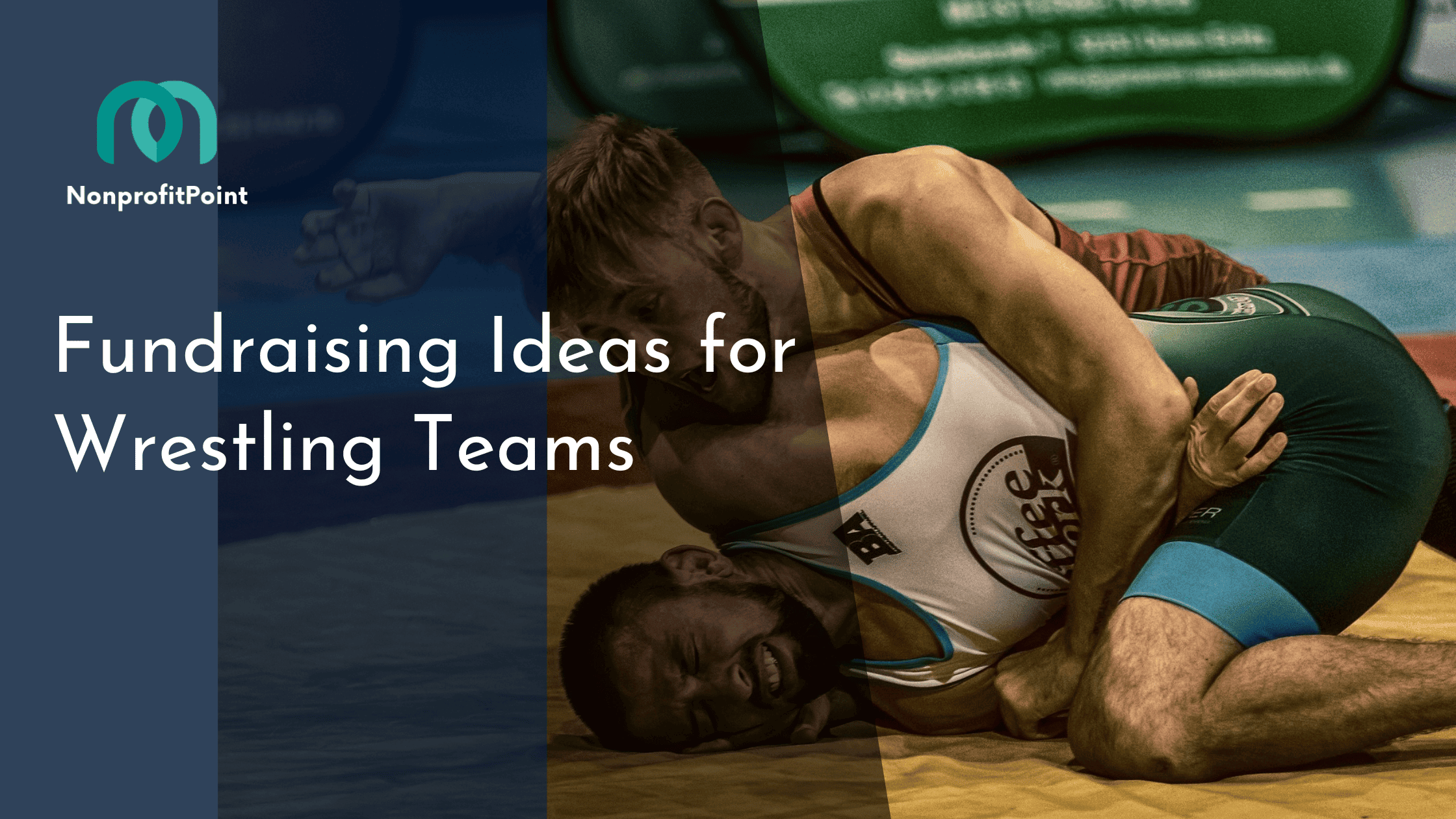
Wrestling teams face many challenges, including raising funds for equipment, training, travel, and other expenses. Fundraising is an essential part of running a successful wrestling program, and with the right approach, it can be a fun and exciting way to bring the team and community together.
There are many creative and effective fundraising ideas for wrestling teams, from auctions and camps to scrimmages and raffles. In this blog post, we’ll explore some of the most innovative and impactful fundraising ideas for wrestling teams, providing inspiration and practical tips to help you raise the funds your team needs to succeed on and off the mat.
Here are 9 Fundraising Ideas for Wrestling Teams:
1. Wrestling Trivia Night

Host a trivia night where attendees can test their knowledge of wrestling history, techniques, and famous wrestlers. The event can be held at a local community center, school, or restaurant. To create the trivia questions, you can research wrestling facts and history, or create questions based on the team’s experiences. Offer prizes for the winning team, such as wrestling gear, autographed memorabilia, or gift cards to local businesses.
To generate revenue, collect a small fee for admission and offer food and drinks for purchase. Consider reaching out to local businesses to sponsor the event and provide prizes or donations.
2. Wrestling Clinic

Host a wrestling clinic where experienced wrestlers can share their skills and knowledge with the community. The clinic can be held at the school’s wrestling room or another appropriate location.
Offer different sessions for different skill levels, such as beginner, intermediate, and advanced. To generate revenue, charge a fee for attendees, and offer merchandise or food for purchase.
3. Fundraising Match

Organize a wrestling match that features local talent and raises funds for the wrestling team. The match can be held at the school or a local venue.
Consider inviting wrestling legends or famous wrestlers to participate or attend to create excitement and attract a larger audience. Sell tickets to the event and offer food, drinks, and merchandise for purchase.
4. Sponsorship
Reach out to local businesses and organizations to sponsor the wrestling team. Offer different sponsorship levels, such as signage at the wrestling room, advertising on the team’s website, or mentions in press releases.
Create a sponsorship package that outlines the benefits of each level of sponsorship and the cost involved. To encourage businesses to sponsor the team, offer to feature their logo or name on the team’s uniforms, provide opportunities for them to promote their products or services, or recognize their contributions during matches or events.
5. Auction

Host an auction featuring donated items such as wrestling gear, autographed memorabilia, or unique experiences. The auction can be held at a local venue, such as a school or community center, or even online through eBay or Facebook Marketplace. To create excitement and attract a larger audience, consider inviting wrestling legends or famous wrestlers to attend and participate in the auction.
Offer a range of items, from practical items like wrestling gear to unique experiences like a private wrestling lesson or a meet-and-greet with a famous wrestler.
To generate revenue, sell tickets to the event and allow attendees to bid on the items. Encourage attendees to bring their friends and family, and consider offering door prizes or raffles to keep the excitement going throughout the night.
To secure more items for the auction, contact local businesses and organizations and ask for donations, or contact wrestling suppliers or manufacturers for donated gear or merchandise. Additionally, consider offering recognition to businesses or individuals who donate items or contribute to the auction significantly, such as mentioning them during the event or including their names in promotional materials.
6. Scrimmage and Exhibition Match

Host a scrimmage or exhibition match between the wrestling team and a rival school or club. This event can generate a lot of excitement and allow the team to showcase their skills and compete against other teams. The event can be held at the school or a local venue and open to the public, with an admission fee.
To create a fun and interactive atmosphere, consider offering food and drinks for purchase, such as concessions, snacks, and beverages. Offer merchandise, such as wrestling gear, autographs, and team T-shirts, for sale. Encourage attendees to bring friends and family, and consider offering door prizes or raffles to keep the excitement going throughout the night.
7. Wrestling Camp

Organize a wrestling camp for children and young athletes to attend. The camp can be held over a few days and focused on learning and practicing different wrestling techniques and improving overall fitness and conditioning. The camp can be held at the school or a local venue and open to the public, with an attendance fee.
Consider reaching out to local businesses to sponsor the camp and provide additional resources, such as wrestling mats, gear, and refreshments. Offer merchandise, such as T-shirts, autographs, and wrestling gear, for sale.
Consider inviting local wrestling legends or famous wrestlers to attend and participate in the camp, offering attendees the opportunity to learn from experienced and accomplished wrestlers.
8. Wrestling Tournament

Host a wrestling tournament with teams from around the region. The tournament can be held at the school or a local venue and open to the public, with an entry fee. To create a competitive and exciting atmosphere, consider offering different categories for different skill levels, such as novice, intermediate, and advanced.
Offer food and drinks for purchase, such as concessions, snacks, and beverages. Offer merchandise, such as wrestling gear, autographs, and team T-shirts, for sale. Encourage attendees to bring friends and family, and consider offering door prizes or raffles to keep the excitement going throughout the day.
9. Raffle
Organize a raffle with prizes such as wrestling gear, autographed memorabilia, or unique experiences. The raffle can be held at a wrestling match, exhibition, or team event. To generate revenue, sell tickets to the event and promote the raffle through social media, local advertisements, and word of mouth.
Offer different tiers of prizes, such as smaller prizes for smaller donations, and bigger prizes for bigger donations. Offer recognition to businesses or individuals who contribute to the raffle in a significant way, such as mentioning them during the event or including their names in promotional materials.
Encourage attendees to bring friends and family, and consider offering door prizes or raffles to keep the excitement going throughout the night.
Here are some tips for successful fundraising for wrestling teams:
- Engage the community: Reach out to friends, family, alumni, and local businesses to build a network of support for your wrestling team. Utilize social media and other online platforms to share your message and reach a wider audience.
- Offer unique experiences: Consider offering unique experiences, such as meet-and-greets with wrestlers, coaching sessions with the team, or exclusive access to tournaments and matches. These experiences can be a great way to engage fans and supporters and generate excitement for your team.
- Make it a team effort: Encourage the whole team to participate in the fundraising process, including the wrestlers, coaches, and parents. Everyone can play a role in reaching out to the community, selling merchandise, and promoting events.
- Leverage the power of merchandise: Create merchandise with your team’s logo and colors, such as T-shirts, hats, and water bottles, and sell them at events and online. This is a great way to generate revenue and increase visibility for your team.
- Focus on the benefits: When reaching out to potential donors or sponsors, emphasize the benefits of supporting your wrestling teams, such as the impact on the community, the opportunities for local businesses to reach new customers, and the chance to support the next generation of athletes.
- Make it fun: Make the fundraising process fun and interactive, by incorporating games, raffles, and other activities into your events. This will generate excitement and enthusiasm and help keep the focus on the goal of raising funds.
- Collaborate with other organizations: Consider partnering with local organizations and businesses to co-host events, such as wrestling tournaments or fundraising campaigns. This can help increase visibility and reach a wider audience.
- Keep it simple: Don’t overcomplicate the fundraising process. Focus on a few simple, effective strategies and put your energy into executing them well, rather than trying to do too much at once.
- Measure your success: Keep track of your fundraising efforts and measure your success, in terms of both funds raised and community engagement. This will help you identify what works best and make informed decisions for future fundraising efforts.
By incorporating these tips into your fundraising efforts, you can create a successful and sustainable fundraising program for your wrestling team.
Final Thoughts
In conclusion, fundraising is a critical component of running a successful wrestling team, and with the right approach, it can be a fun and rewarding experience for everyone involved. By exploring different ideas and finding the right approach for your team, you can generate the funds you need to support your athletes and ensure a bright future for your wrestling program.
Whether you host an auction, organize a wrestling camp, or hold a raffle, the key is to be creative, engage the community, and have fun. With a little effort and determination, you can achieve your fundraising goals and create a winning wrestling program that inspires and empowers your athletes.
Wrestling Team Fundraising FAQs
How much do high school and youth wrestling programs typically need to raise?
Wrestling team fundraising goals range from $3,500 to $35,000 per season, with the spread driven by program scale, travel-tournament schedule, and whether the program is school-funded or fully booster-supported. Small youth wrestling clubs (15–40 wrestlers) typically need $3,500–$8,500 per season for singlets, headgear, tournament entry fees, and travel to 4–8 regional tournaments. Mid-tier high school programs (40–80 wrestlers across varsity, JV, and freshman teams) consistently budget $9,500–$18,500 covering uniforms, mat replacement reserve, video equipment, tournament fees, summer camp scholarships, and 6–12 weekend tournament travel days. Premium program tiers — high school programs with state-tournament travel requirements, summer freestyle/Greco-Roman programs, or year-round club programs — run $22,000–$45,000 with home-tournament hosting (which often produces $5,500–$15,500 in concession-and-admission revenue as an offset). The single biggest budget item is typically tournament fees and travel — 40–55 percent of program budget covers entry fees ($18–$45 per wrestler per tournament), bus or van travel, and 2–6 hotel-stay tournaments per season for the longer-distance state-qualifying events.
Which fundraisers work best specifically for wrestling team budgets?
Five formats consistently outperform across documented wrestling-team fundraising programs: (1) home-tournament hosting — the single highest-ROI wrestling fundraiser, raises $5,500–$18,500 in concession, admission, t-shirt, and program-ad revenue from a single weekend tournament hosting 12–30 visiting teams; the tournament also strengthens the program reputation that drives wrestler recruitment for following years; (2) duals or quad-meet hosting — smaller-format tournaments hosting 3–8 visiting teams, raises $1,500–$5,500 per event with lower volunteer staffing burden than full bracket tournaments; (3) corporate sponsorship campaigns in the wrestling-community-aligned vertical — chiropractors, sports-medicine clinics, physical therapy practices, gym and fitness facilities, local restaurants and pizzerias frequented by wrestlers and families, and outdoor and sporting-goods retailers; typical sponsor commitment $250–$2,500 with 8–25 sponsors per program; (4) take-home product sales (typically the wrestling-community staples: jerky, beef sticks, pickle pops, frozen pizza kits, cookie dough, popcorn) — the highest-volume product sales for wrestling programs are calorie-dense protein items that align with the audience demographics, raises $2,500–$8,500 over a 3–5 week sales campaign; (5) alumni-and-parent giving programs — tiered annual giving at $50 (assistant coach level), $250 (varsity level), $500 (state-qualifier level), $1,000+ (champion level), strongly converts wrestling alumni who carry lifetime affinity for their high school program, consistently produces $4,500–$15,500 in concentrated revenue. Avoid: high-cost galas (cuts net 35–55 percent and the wrestling-program donor base under-attends formal events versus tournament-spectator events), and over-relying on percentage-night restaurant fundraisers (cumulative revenue rarely exceeds $1,500–$3,500 per season relative to the organizing effort).
How do we organize and price a home wrestling tournament for maximum revenue?
Home-tournament hosting is the highest-ROI wrestling fundraiser, but the revenue depends entirely on operational discipline across five pillars: (1) admission pricing — charge $5–$10 per spectator per day with $15–$25 weekend passes, free admission for wrestlers and coaches with team-roster verification; mid-tier tournaments produce $1,800–$5,500 in admission revenue alone over a Friday-Saturday or Saturday-Sunday format; (2) concession operations — the largest single revenue line at most home tournaments, typically producing $2,500–$8,500 across the weekend; staff with 12–25 parent volunteers, stock the wrestling-community staples (hot dogs, pizza slices, nachos, energy drinks, water, coffee, breakfast burritos for early Saturday weigh-in spectators), price at 2.5–3.5x COGS, and run the concession 6 am to 8 pm Saturday plus 7 am to 4 pm Sunday for typical bracket schedules; (3) tournament t-shirt and program-book sales — pre-printed tournament shirts at $20–$25 each with the host program logo, year, and bracket-region naming, raises $800–$3,500; program books with team-roster listings and local-business advertising (sold at $50–$250 per ad page) raise $1,500–$5,500 in concentrated ad revenue with relatively low fulfillment cost; (4) sponsor-and-banner program — local-business banners hung in the gymnasium during the tournament at $150–$500 per banner, typically 10–25 banners per tournament weekend producing $2,500–$8,500 in pure-margin revenue (the banners are reusable across tournament years); (5) wrestling-products vendor row — invite 4–10 wrestling-product vendors (shoes, headgear, custom apparel, supplement, training-equipment) to set up booths in exchange for a $150–$400 vendor fee plus optional commission — the vendor presence enhances the tournament-attendee experience and produces $1,500–$4,500 in vendor-fee revenue. Avoid: free-admission tournaments (leaves $1,800–$5,500 on the table), under-staffing concession (the highest-volume revenue stream requires consistent 12-plus volunteer rotation), and over-pricing t-shirts (above $25 conversion drops 35–55 percent against price-anchored expectations).
How do we structure booster club giving and alumni engagement?
Booster-club giving and alumni engagement are the highest-LTV (lifetime-value) revenue streams in wrestling-program fundraising, and they require disciplined cadence rather than ad-hoc asks. Five operating rules: (1) build a tiered giving menu with named-recognition deliverables — assistant coach level $50–$100 (program-book listing), varsity level $250–$500 (jersey-name patch sponsorship or banner naming), state-qualifier level $500–$1,000 (banner-program plus annual-banquet recognition), champion level $1,000+ (named scholarship or championship-trophy sponsorship); tiered menus consistently produce 3–5x the conversion of flat-rate annual appeals; (2) maintain an alumni-roster database with year-graduated, weight-class history, and known-employer-and-location data; the database is the single most important asset for sustained alumni giving and most programs neglect to build one until the program has a championship-banner-year that prompts the effort; (3) host one alumni-event per year (typically a alumni-versus-current-roster dual-meet weekend, alumni hall-of-fame banquet, or end-of-season banquet with alumni recognition) — the in-person engagement consistently lifts following-year alumni giving 35–65 percent versus mail-only or email-only appeals; (4) communicate program impact 4–8 times per year via email newsletter, social-media updates, and physical mailings with photographs of current wrestlers, season records, and senior-class-college-commitment announcements; consistent communication is the variable most correlated with year-over-year giving retention; (5) provide every donor with a tax-receipt letter within 30 days plus a season-recap impact letter at the end of the season — donors with documented impact reports renew at 70–85 percent rates versus 25–40 percent for donors who don’t receive impact follow-up. Avoid: appealing only at season-start (donor base over-indexes on season-end and championship-week emotional connection), neglecting the alumni database (compound interest matters here, year 5 alumni-giving is structurally larger than year 1 by 3–5x), and burying the giving-tier menu in the program book (it should be a standalone document mailed to every alumni and parent-of-current-wrestler at the start of every season).