
10 Fun Run Fundraising Ideas For Nonprofits That Will Get You Excited

When you’re a nonprofit, it can feel like everything is working against you. It can be difficult to find new ways to fund your organization that are also cost-effective and sustainable. The best fundraising ideas must be fun, so your team doesn’t dread them. How do you get people excited about giving you money?
Editor’s Note — Updated April 2026: Before publishing, the Nonprofitpoint editorial team cross-references each charity in this guide against four independent watchdogs — Charity Navigator, CharityWatch, GuideStar / Candid (Form 990), and BBB Wise Giving Alliance. We re-verify ratings every quarter; if anything on this page is out of date or inaccurate, please email team@nonprofitpoint.com and we update within seven days.
You make it fun! Whether you’re looking for fun ways to engage with the community or a creative way to raise funds for your organization, these fun-run fundraising ideas will hit you in no time.
Let’s dive in and check out some of the most effective ways your nonprofit can use a fun run as an opportunity to raise money.
10 Fun Run Fundraiser Ideas to get you started:
Host a Virtual Race
The great thing about virtual races is that they can be done anywhere, at any time. If your members are spread out across the country, or even the world, hosting a virtual race can really engage your global community.
Virtual races can be run at any type of distance, from sprints to marathons. The beauty of virtual races is that participants can run, walk, or do an activity that works for them. You can even host a virtual race for kids.
If you’re interested in hosting a virtual race, there are a few companies worth checking out. Zelle, Nike+, and Runners World Race are a few of the top virtual race platforms worth exploring.
Virtual races are easy to host and great for engaging your community on a large scale. With the help of these companies, you can easily set up a virtual race and get people excited to participate.
Fundraising Run-Walk

This is a great option if you’re looking for a run-walk event. A run-walk event combines aspects of a 5K run and a walk. It’s great for an event where you want to get people moving but might not have as many participants as a run.
A fundraising run-walk event is also great for people who aren’t runners. It allows people to participate in a fun event while still walking. You can set fundraising goals for both the event run and walk portions.
You can also set a goal for the walk portion for those who still want to walk. If you want to host a fundraising run-walk event, the best thing to do is to start with a plan. Figure out where you want to host the event, how you will get people involved, and what you need to get started.
One of the best ways to get started is by reaching out to your network and asking if people would be interested in participating.
T-Shirt Run fundraiser

Hosting a T-shirt run fundraiser is a great way to engage your community and get people excited about your organization. This event is great for sports teams, clubs, and other organizations.
The premise behind a T-shirt run fundraiser is that your participants have to run a certain distance to earn a T-shirt. You can also choose to host a walk or run to earn a T-shirt.
This fundraiser is great for teams or clubs because it is a good way to get people active. It also helps build camaraderie among the team members.
You can choose to host your T-shirt run at various distances, such as 10k, 5k, 5 miles, or 10 miles. You can also choose to have your participants walk or run the distance. This is a great way to get people who have never participated in an athletic event involved with your organization.
Coordinated Stroller Run
Hosting a coordinated stroller run gives you the added bonus of getting kids involved in the event. In this event, mothers bring their strollers to the event and run or walk with their children in the stroller.
It’s a fun and creative way to get moms involved in the fundraiser.
You can choose to make a stroller run a casual walk or have your moms complete the whole distance, depending on their fitness level. You should also decide if you want to assign a certain amount of laps for each mother and child team or if you want it to be completely random.
This event is great for organizations that focus on families or those trying to increase their membership among young parents.
A Pizza Run fundraiser

For this fun run fundraiser idea, you partner with a local pizza shop to host the event. The premise behind this event is that participants have to run a certain distance to earn a slice of pizza.
You can also choose to have people earn a slice of pizza by walking a specific distance. This is a fun way to bring people together for a run-walk event.
Another way to make this run-walk event work is to have people donate money for each mile they run. You can also make your event semi-competitive and award prizes for the top finishers or runners in certain age divisions.
This is a great way to engage a larger community of runners that may be more interested in running and less interested in walking.
Dirty Shrun and Shake fundraiser
You can partner with a local cleaning company for this fun run fundraiser. Participants must run or walk a certain distance to earn a free cleaning service. This is a great way to engage people who live in your community.
It’s also a fun way to get people excited about a service that they might not be as excited about.
A glow run fundraiser
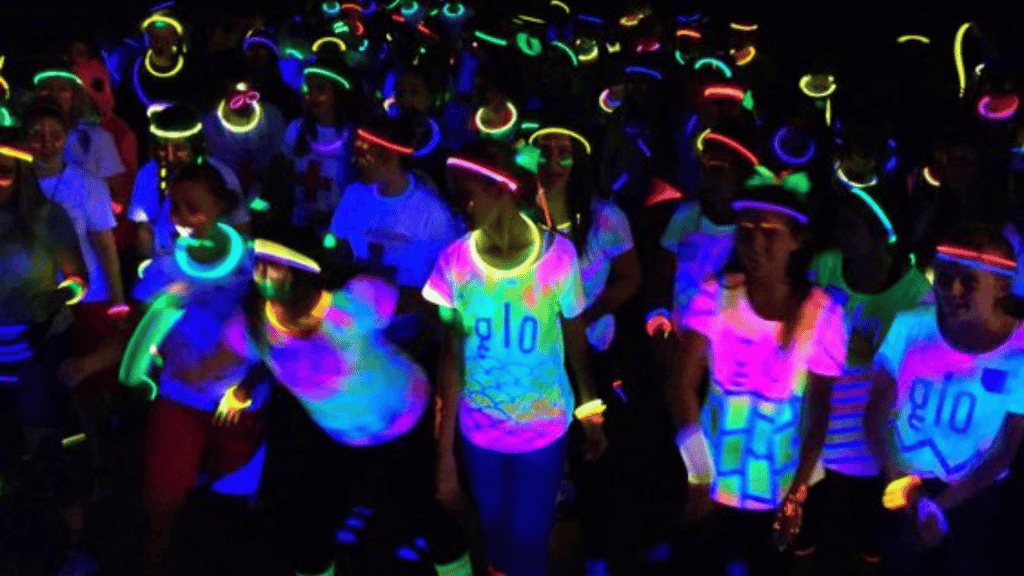
The glow run is a fun way to bring kids together for charity. It’s a cross between a nighttime 5K and a costume party.
The kids will love wearing their costumes and getting scared by people in the dark dressed up like crazy characters such as vampires, zombies, mummies, king cobras, and more!
- Decide how much you want your child participants to raise per child and how many participants you are looking for.
- Consider setting goals for how much money you expect to raise based on the number of participants you choose to have in your event. Ask each participant to raise that amount per child or an additional amount per child (this will make it worthwhile for customers).
- Also, set what age bracket you want your participants to be in; it could to get pledges from local businesses, organizations, and individuals to support your pizza fundraising event.
- If you set a goal of making $500, for example, and then raise $750, your pizza shop might offer you a discount of 50 percent off the pizzas you buy.
Run A Charity Auction
If you’re hosting a large fundraising event, hosting a charity auction is a great way to raise funds for your organization. This type of event is typically more expensive than other types of events, but it also has the ability to raise more money.
It’s a great option if you have a large network of people willing to donate items for the auction.
Commitment Ceremony
While this isn’t a traditional run event, it is a great way to engage people in your organization and get them excited about your cause. A commitment ceremony is a ceremony where people promise to do something for your organization.
You can host a commitment ceremony during a run or walk event or outside of it. It’s a creative way to get people excited about your cause while also gaining new donors for your organization.
Commitment ceremonies are usually smaller, more intimate affairs that last anywhere from 10 minutes to a couple of hours.
Many of them also incorporate themes like love and togetherness. These events can be especially meaningful for your current donors. They are likely to feel very connected to your cause during a run or walk event and may find the commitment ceremony to be an easy way to step up their involvement.
Beyond the entry fee — squeeze more from every runner
Most fun-run fundraisers leave 40–60% of potential revenue on the table by relying only on registration fees. Layer on these companion levers and the same 200-runner event clears $8K–$15K instead of $4K:
- Donation jar wording ideas — tip-jar wording at the registration table, water stations, and finish-line booth captures the 25–40% of supporters who came to cheer but didn’t register — the jar headlines here lift cash collection 2–3x.
- Funny ways to ask for donations — pre-race social posts with humor (costume contests, coach-pied-at-the-finish-line, slowest-team trophy) drive 30–50% more registrations than earnest asks — these formats are tested across hundreds of run-fundraisers.
- Birthday fundraiser wording examples — ask every runner whose birthday falls within 30 days of race-day to launch a Facebook birthday fundraiser tied to the run — these wording templates raise $200–$1,500 per runner-birthday, on top of registration.
Hold A Co-Op Fundraiser
A co-op fundraiser is a great way to engage your network and get people excited about your cause. A co-op fundraiser allows members of your network to purchase items together and get discounted rates on items.
Some examples of co-op fundraisers include buying a bulk order of a certain product and getting a percentage off for the order, purchasing items to donate to a non-profit, or purchasing items in bulk to sell at a profit.
Final Thoughts
Don’t feel like you have to choose just one fun run fundraiser. In fact, it’s better if you don’t. A combination of different types of fun run events will engage your network in a variety of ways.
This will help you get more participants and raise more money. Plus, getting more people excited about your cause will be much easier to get them on board with other fundraising efforts.
There’s nothing more exciting than getting people involved in your organization.
Fun Run Fundraiser FAQs
What’s the realistic per-runner net for a fun run fundraiser?
Plan for $35–$75 net per registered runner for a community 5K when entry is $30–$50, costs are tight, and you add a pledge or per-mile sponsorship layer. School-based fun runs (no entry fee, pledge-only model) clear $100–$250 per student because parents and grandparents sponsor at $1–$5 per lap and kids run 15–30 laps. Add corporate team sponsorships ($500–$2,500 per team) and the per-participant blended math reaches $80–$150 for the community model. The number to watch is event cost as a percentage of gross — anything above 35% means your timing, t-shirts, or insurance is overscoped for the size of your race.
Do you need permits and insurance for a community fun run, and what does that actually cost?
Almost always yes if you’re using public roads, parks, or trails. Most municipalities require a 30–60 day advance application with proof of $1M general liability insurance (cost: $300–$900 from a one-day event policy through K&K, Hagerty, or your nonprofit’s existing carrier). Add police/sheriff traffic control for road races ($400–$1,500 depending on course length and officer count), a parks permit ($25–$300), and porta-potty rental ($150–$400 for a 200-runner race). Total fixed permit-and-insurance overhead for a community 5K usually lands at $1,200–$3,500 before any t-shirt or timing-chip cost.
How many corporate sponsors do you need before launching a fun run?
Lock at least three sponsors at the $500+ level before opening registration to cover fixed costs (permits, insurance, t-shirts for the first 100 runners) so every dollar of entry-fee revenue is net. A working sponsor ladder is one presenting sponsor at $2,500–$5,000 (logo on bibs, race name attribution, banner at start/finish), two gold sponsors at $1,000–$1,500 (banner + t-shirt logo), and four to six bronze sponsors at $250–$500 (t-shirt logo only). Sponsors typically close 8–12 weeks before race day, so a 14-week timeline from sponsor-pitch to race-day is the working minimum. Don’t open public registration until the presenting sponsor is signed.
What’s the most common mistake first-time fun run organizers make?
Buying chip-timing for a 100-runner fun run. Chip-timing costs $4–$8 per runner plus a $400–$800 minimum and you don’t need it under 150 runners — manual stopwatch + finisher-card system works fine for under-100 races and saves $800–$1,200. The second-biggest miss is launching registration without an early-bird tier — opening at $35 with a $25 early-bird-until-60-days-out cuts your no-shows in half because committed-early registrants actually show up. Third: forgetting to plan for water/snacks at the finish line. A $0.40-per-runner snack station drives word-of-mouth for next year’s race more than the t-shirt does.