Tech-Driven Fundraising: How Apps, Blockchain, and AI Are Revolutionizing Charitable Giving 2026

Editor’s Note — Updated May 2026. Our team reviews nonprofit and fundraising guides quarterly, cross-referencing program details against Charity Navigator, CharityWatch, GuideStar/Candid, and BBB Give.org — and we publish program or naming updates within 7 days of verified changes. Spotted an outdated name or broken link? Email team@nonprofitpoint.com and we’ll correct the record.
As the digital world rapidly evolves, so too does the landscape of charitable giving. The emergence of tech-driven fundraising is transforming how nonprofits engage with donors, streamline operations, and build trust. From mobile donation apps to blockchain and artificial intelligence, technology is enabling nonprofits to maximize reach and impact while improving donor experiences.
Ready to choose the right tech stack? Before you pick donation apps, blockchain platforms, or AI tools, you need a donor system that can actually store and act on the data they generate. Start here: Best CRM for Nonprofits (2026): 9 Platforms Compared — our hands-on review of the 9 platforms most nonprofits shortlist, with pricing, features, and real use-case guidance.
This in-depth exploration will cover the rise of mobile giving, the role of blockchain in charitable transparency, AI-powered donor engagement, and the expanding influence of social media. By understanding these tools, nonprofit organizations can implement smarter strategies to thrive in today’s fundraising environment.
The Rise of Mobile Donation Apps
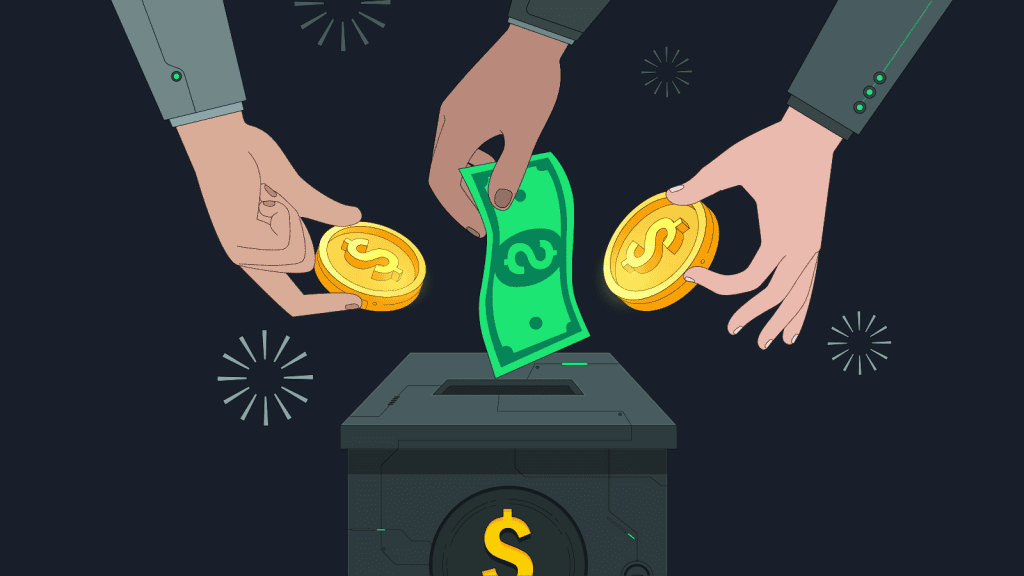
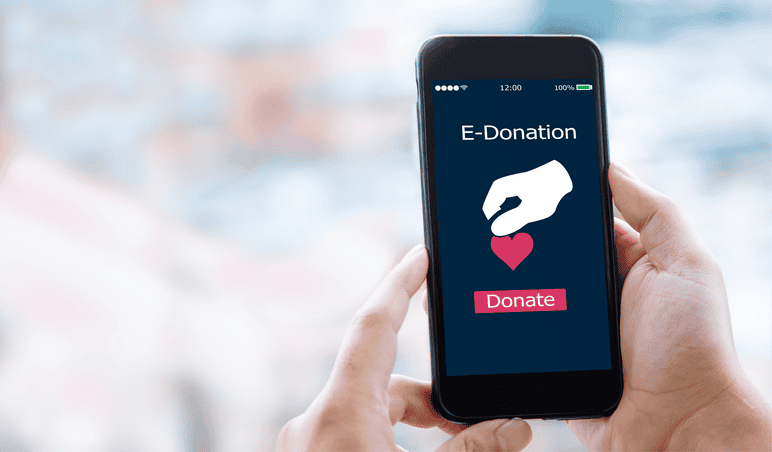
Smartphones are now a ubiquitous part of modern life, and they’ve become central to the way people support causes they care about. Mobile donation apps allow donors to give in just a few taps, whether during a campaign, after reading a social media post, or while attending a fundraising event.
Key Statistics on Mobile Fundraising
| Metric | Insight |
|---|---|
| Mobile Discovery | 25% of donors use mobile devices to discover nonprofits they were unaware of |
| Mobile Donations | 1 in 4 donations are completed via mobile device |
| Website Traffic | 57% of nonprofit web traffic comes from mobile devices |
| Revenue Source | 75% of fundraising revenue is still generated through desktop users |
While mobile traffic dominates discovery and engagement, actual conversions—donations—are still primarily made on desktops. This highlights a key opportunity for nonprofits: improving mobile donation experiences to reduce friction and boost conversion rates.
Leading Mobile Donation Platforms
| Platform | Key Features | Website |
|---|---|---|
| Donorbox | Offers Text-to-Give, Live™ Kiosks, recurring donation management, and social sharing tools | donorbox.org |
| Givelify | Known for simplicity and intuitive design, supporting QR code giving and mobile-first donations | givelify.com |
| Pledge | Global reach, no-cost fundraising, and integration with over 2 million verified nonprofits | pledge.to |
These tools not only simplify the donation process but also provide analytics, integrations with CRM systems, and options for event-based fundraising—empowering organizations to run sophisticated mobile campaigns with minimal technical expertise.
Blockchain Technology: Redefining Trust in Charitable Giving
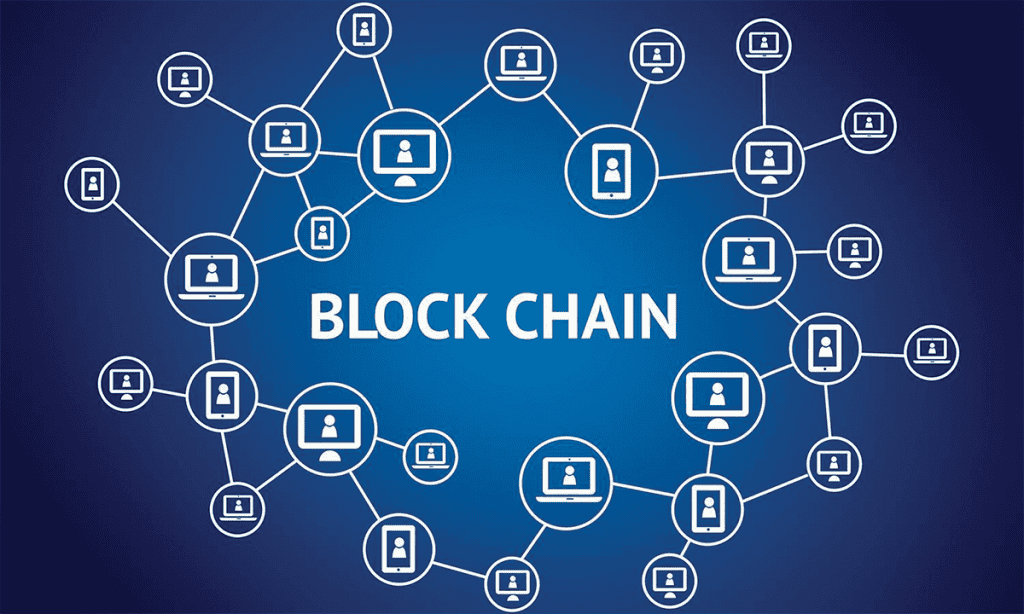
Blockchain is emerging as a powerful tool to increase transparency and efficiency in nonprofit operations. Its decentralized, tamper-resistant ledger system allows donors to verify where their contributions are going, how they are used, and what impact they have made.
Key Benefits of Blockchain in Fundraising
| Benefit | Description |
|---|---|
| Transparency | Donors can trace funds in real time, increasing accountability |
| Efficiency | Reduced overhead costs by eliminating intermediaries and automating verification |
| Security | Immutable records prevent fraud and unauthorized access to financial data |
Blockchain-based donation systems can be especially valuable in global crises, where rapid and transparent deployment of aid is essential.
Schedule a free consultation with a nonprofit video expert
At Happy Productions, we help nonprofits use video to create volunteer spotlights
Schedule Free Consultation →Notable Blockchain-Based Fundraising Platforms
| Platform | Description | Website |
|---|---|---|
| The Giving Block | Allows nonprofits to accept cryptocurrency donations securely and with tax optimization | thegivingblock.com |
| BitGive Foundation | A pioneering Bitcoin-based nonprofit committed to improving transparency in global philanthropy | bitgivefoundation.org |
| Giveth | A decentralized platform offering zero-fee crypto donations and funding for open-source charity projects | giveth.io |
Blockchain doesn’t just improve efficiency—it fosters a culture of trust, particularly with younger, tech-savvy donor bases who expect greater transparency and control over their giving.
Artificial Intelligence in Fundraising: Smarter Engagement
Artificial intelligence (AI) is no longer confined to the corporate world. Today, it is revolutionizing AI in fundraising by helping nonprofits identify donor behaviors, predict giving patterns, and personalize outreach.
Applications of AI in Nonprofit Fundraising
| Application | Function |
|---|---|
| Predictive Analytics | Forecasts donation likelihood, major gift potential, and optimal campaign timing |
| Personalization | Delivers targeted messages based on individual donor preferences and behaviors |
| Automation | Streamlines repetitive tasks such as email follow-ups, thank-you notes, and data entry |
AI-driven tools enable fundraising teams to operate more efficiently while cultivating deeper, more personalized donor relationships—boosting both retention and lifetime value. For nonprofits seeking the right platforms and strategies, curated nonprofit resources can help guide technology adoption and implementation.

Social Media: Amplifying Reach and Community Impact
With billions of people using social platforms daily, social media fundraising has become an indispensable part of nonprofit marketing strategies. From viral giving campaigns to peer-to-peer fundraising events, social media enables organizations to tap into larger audiences with minimal budget.
Captivate Gen-Z Donors with Video
Happy Productions creates shareable, authentic videos that speak to Gen-Z’s digital-first mindset. We help you tell stories that align with Gen-Z values on the platforms they love, turning young viewers into engaged donors.
Connect with Gen-Z – Free Consultation →Key Social Media Fundraising Insights
| Metric | Insight |
|---|---|
| Engagement | 55% of users who interact with nonprofits on social media take some form of action |
| Donations | 59% of those who engage go on to donate financially |
| Sharing Power | Social sharing exponentially increases campaign visibility and conversions |
Platforms like Facebook, Instagram, LinkedIn, and TikTok are used to build communities, share real-time updates, and drive campaign momentum through user-generated content and storytelling.
Best practices for social media fundraising include:
- Using compelling visuals and videos
- Highlighting donor stories and impact
- Incorporating hashtags and social proof
- Encouraging peer fundraising and challenges

Real-World Case Studies: Technology in Action
UNHCR and Stellar Blockchain for Crisis Aid
The United Nations High Commissioner for Refugees (UNHCR) partnered with the Stellar Development Foundation to deliver humanitarian aid to Ukrainian refugees using the USDC stablecoin on Stellar’s blockchain. Refugees could receive funds instantly and securely, avoiding delays and corruption risks.
LUXARITY’s Blockchain-Based Donation Campaign
In 2018, LUXARITY, a luxury upcycling initiative in Hong Kong, conducted a blockchain-powered fundraising campaign during its “Preloved Pop-Up” event. Donors received tokens that tracked the environmental and social impact of their contributions—showcasing a model for traceable, eco-conscious giving.
These examples highlight how innovative tools can provide more than operational improvements—they build credibility, transparency, and long-term donor trust.
Where tech-driven fundraisers leave conversion dollars in the funnel
Tech-driven fundraisers can scale where traditional events can’t — but most programs stall at $5–$20K because they ship the platform and skip the wording, the video pairing, and the at-the-gateway micro-asks that make the donate page actually convert. Layer the stack with these companion levers and the same traffic clears 2–4x more without a single new ad dollar:
- How to ask for donations — the email-and-landing-page ask is what separates a $5K digital fundraiser from a $40K one — these scripts cover the subject-line opener, the donor-story pivot, the suggested-amount anchor, and the post-gift follow-up that compounds first-touch donors into recurring monthly givers.
- Nonprofit fundraising videos — the 60–90-second mission video paired with a donate-now CTA is the single highest-leverage asset on any tech-driven page — programs that ship video alongside the form consistently double conversion vs text-only pages and lift average gift 20–40%.
- Donation jar wording ideas — the same wording mechanics that lift physical-jar collection translate directly to digital — the suggested-amount labels, the named-program tags, and the urgency-cue copy that converts an in-person visitor convert a website visitor at 2–3x baseline donate-button click rates.
The Future of Tech-Driven Fundraising
As donor expectations evolve, nonprofits must adapt by embracing fundraising tech that aligns with modern giving behaviors. Here’s what lies ahead:
- Voice-enabled donations through smart assistants (e.g., Alexa, Google Home)
- Augmented reality (AR) experiences to visualize impact
- Decentralized Autonomous Organizations (DAOs) for community-led funding decisions
- Integrated donation widgets in livestreams, webinars, and digital events
The future of fundraising is integrated, data-driven, and hyper-personalized. Nonprofits that adapt quickly will not only raise more funds but also cultivate stronger, more loyal donor communities.
Conclusion
Technology is no longer a luxury in the nonprofit sector—it’s a necessity. From mobile donation apps and blockchain systems to AI-powered engagement and social media fundraising, tech-driven fundraising is enabling nonprofits to reach new heights of impact, efficiency, and transparency.
For nonprofits aiming to future-proof their fundraising efforts, investing in modern tools and strategies is essential. By leveraging the right combination of nonprofit fundraising tools, organizations can create seamless, secure, and emotionally resonant experiences that drive long-term donor support and organizational growth.
Tech-Driven Fundraising FAQs
What does tech-driven fundraising actually look like for a small or mid-size nonprofit in 2026?
The structural tech stack that holds across most organizations under $5M annual revenue. (1) A CRM (Bloomerang, Little Green Light, Neon One, Salesforce NPSP, or Virtuous) as the donor system of record – any of these in the $50-$500/mo range covers organizations up to a few thousand active donors. (2) A peer-to-peer and event giving platform (Givebutter, Classy, Donorbox, GoFundMe Charity) for campaigns and events – typically free with payment processing fees of 2.5-3.5%. (3) An email marketing platform (Mailchimp, Constant Contact, Klaviyo, Mailerlite) for newsletter and appeal campaigns – $0-$200/mo depending on list size. (4) A donation page integrated with the website (Donorbox, Bloomerang, Givebutter, Stripe Giving) supporting recurring giving, Apple/Google Pay, ACH bank transfers, and stock/crypto giving via The Giving Block or similar. (5) Marketing-attribution layer through Google Analytics 4, Meta Pixel, and a tagged-link strategy (UTM parameters on every email and social post) so that revenue can be tied back to source channels. Programs that run all five layers consistently see 18-35% year-over-year online-giving growth versus 2-8% for programs running only a donation form. The single biggest lever inside the tech stack is recurring-giving conversion – moving 8-15% of one-time donors to monthly recurring giving doubles or triples the lifetime value of that donor base because monthly donors give 3-5x more annually than one-time donors and retain at 80-95% versus 30-45% for one-time.
What are the highest-ROI tech tools for a nonprofit on a $0-$5,000 annual tech budget in 2026?
Working tier-by-tier stack at three price points. (1) $0-$500/year: Givebutter (free peer-to-peer + donation forms with optional 0-5% tip-to-cover-fees model that makes the platform free to the org), Mailchimp free tier (up to 500 contacts) or Mailerlite free tier (up to 1,000 contacts), Canva free tier for graphics, Bitly free for link tracking, Google Workspace for Nonprofits ($0 for qualifying 501(c)(3)s) for email and storage. This stack covers organizations with up to 1,000 contacts and ~$50,000 annual online revenue without paying for any SaaS. (2) $500-$2,000/year: Little Green Light CRM ($39-$249/mo based on contacts), Mailchimp Standard ($20-$200/mo), Donorbox Pro ($25-$120/mo), Canva Pro ($120/year), Trello or Asana free tier for campaign project management. This stack scales to ~5,000 contacts and ~$250,000 online revenue. (3) $2,000-$5,000/year: Bloomerang or Neon One CRM ($99-$499/mo), Klaviyo email ($45-$200/mo), Givebutter Plus, Canva Teams, Hubspot Marketing Hub Starter, basic SEO tool (Ahrefs, Semrush, or free Google Search Console). Scales to ~15,000 contacts and ~$1M online revenue. The structural rule: pick the CRM first and constrain every other tool to integrate with it natively – the cost of poor data integration over 3-5 years exceeds the cost of any individual subscription several times over.
How should a small or mid-size nonprofit use AI in fundraising in 2026?
Working applications that have produced measurable returns at small and mid-size orgs in the 2024-2026 window. (1) Donor-segmentation AI (Bloomerang Insights, Virtuous, DonorSearch, Wealth Engine) – identifies major-gift prospects in your existing donor database that you’ve under-prioritized. Programs that run this layer typically discover 15-30 new major-gift prospects per 1,000 donors and lift major-gift revenue 20-40% in the following 12-18 months. (2) Generative-AI-assisted appeal drafting (ChatGPT, Claude, Gemini) for first-pass email copy, social-media posts, and donor-thank-you letter personalization – typical productivity lift of 40-70% on copywriting time, which lets a one-person communications staff produce 2-3x more donor touchpoints in the same hours. (3) Personalized donor journey automation (Klaviyo, Mailchimp Customer Journey Builder, Hubspot Workflows) – automated welcome series for new donors, lapsed-donor recovery flows, and birthday/anniversary touchpoints. Typical lift on email-driven revenue is 25-50% when journeys are well-built. (4) Predictive lapsed-donor recovery (Virtuous, Bloomerang Insights) – identifies which donors are most likely to lapse in the next 90 days and triggers a re-engagement flow. Typical lapse-recovery improvement of 8-15 percentage points. The structural rule: every AI use case should have a human-in-the-loop review for any communication going out, especially for thank-you letters and major-donor communications where impersonal AI drafts erode trust. Use AI for the 70% draft, never the 100% send.
What’s the most common mistake nonprofits make with tech-driven fundraising in 2026?
Buying multiple disconnected tools and ending up with donor data scattered across the CRM, email platform, event platform, payment processor, and website forms – then never properly reconciling it, which produces inaccurate donor records, duplicated appeals, and missed major-gift moments. The failure pattern: a $400,000 org runs Bloomerang for CRM, Mailchimp for email, Givebutter for events, Donorbox for the website donation form, and Square for the in-person silent auction – and after 18 months has 4,200 contacts in Bloomerang, 3,100 in Mailchimp, 800 in Givebutter, 1,500 in Donorbox, and 600 in Square, with overlap and duplicate records that no one has time to clean. The fix is to designate the CRM as the system of record and force every other tool to push to it through native integration or Zapier/Make sync – if a tool can’t sync to your CRM, replace it. Plan on dedicating 10-15% of staff fundraising time to data hygiene (deduping, merging, source-tagging, contact updates), which sounds expensive but is the difference between a $400,000 org that grows 5% a year and one that grows 20% a year. The second-most-common miss is not building the recurring-giving program early – every dollar invested in moving one-time donors to monthly recurring giving returns 3-5x over a 24-month window versus the same dollar spent on acquiring net-new one-time donors. The third miss: skipping the marketing-attribution layer (UTM parameters, Google Analytics 4 conversion tracking) because the setup feels technical – without attribution, the org has no way to know which channels are working and ends up under-investing in the highest-ROI channels.