The Ultimate Guide to Running a Successful Dunkin Donuts Fundraiser

Editor’s Note — Updated May 2026. Our team reviews nonprofit and fundraising guides quarterly, cross-referencing program details against Charity Navigator, CharityWatch, GuideStar/Candid, and BBB Give.org — and we publish program or naming updates within 7 days of verified changes. Spotted an outdated name or broken link? Email team@nonprofitpoint.com and we’ll correct the record.
Have you ever been so passionate about something that you would be willing to spend your money to support it? That’s exactly what people do when they host a Dunkin Donuts fundraiser. It is one of the most popular and successful school fundraising events because people love donuts, and almost everyone can afford to buy one.
These fundraisers are so effective that they are used by schools all over the country. Knowing how much time, energy, and resources go into hosting any fundraiser will help you understand why not everyone can host one.
It’s not as simple as buying a box of donuts and selling them for $1 each. If you are up for the challenge, read on to learn more about running a successful Dunkin Donuts fundraiser:
- What You Need to Know About Running a Successful Dunkin Donuts Fundraiser
- Why Host a Dunkin Donuts Fundraiser?
- What You Need to Run a Successful Dunkin Donuts Fundraiser
- Step 1: Decide on a Location
- Step 2: Set Up Your Registration Times and Dates
- Step 3: Advertise Your Fundraiser
- Step 4: Run the Fundraiser and Track Sales
- Tips for Running a Successful Dunkin Donuts Fundraiser
- Final Words: Wrapping Up
What You Need to Know About Running a Successful Dunkin Donuts Fundraiser
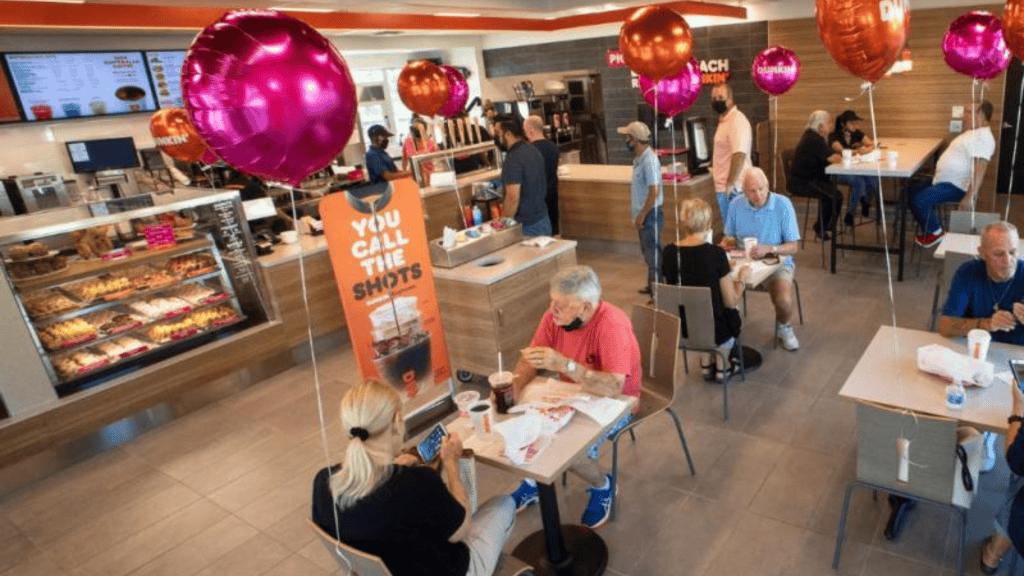
There are many things to consider before hosting a Dunkin Donuts fundraiser. You need to know how much time you have to plan the event, how much effort you’re willing to put towards it, and how much money you will make.
Here are some important facts to remember when planning your Dunkin donuts fundraiser:
- You need to be very organized. This is not something you can do last minute.
- You will need to advertise your event, so be prepared to create posters, flyers, and other print materials.
- You need to secure a location for your event and a permit if necessary.
Why Host a Dunkin Donuts Fundraiser?
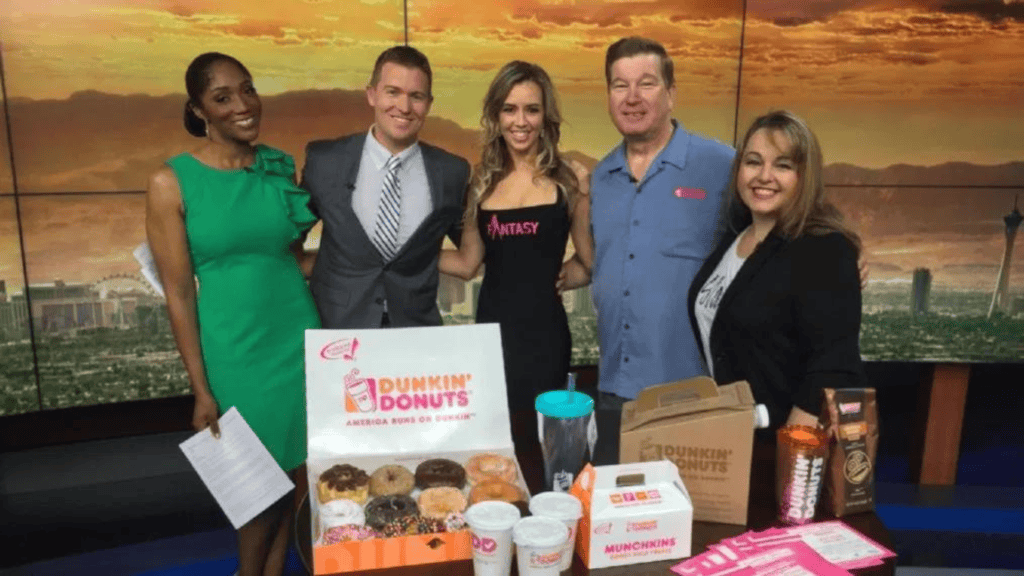
Hosting a Dunkin Donuts fundraiser has plenty of benefits for you and your school. You will gain great community support and get to try lots of donuts and coffee for free. If you sell enough donuts, you’ll also raise a lot of money for your cause.
Beyond that, you’ll be helping to support a local business. Dunkin Donuts is a staple in many communities. When you host a fundraiser at your local Dunkin, you are contributing to the business’s success, which, in turn, helps your community thrive.
What You Need to Run a Successful Dunkin Donuts Fundraiser
You’ll need a few key things to host a successful Dunkin Donuts fundraiser for your school or organization. Getting these items in an order as soon as possible is important, so you have plenty of time to sell donuts and collect money. Here’s what you need to get started:
- A permit: Before you sell donuts to public members, you will need a permit. Some municipalities require donut fundraisers to obtain a permit before you open for business.
- A location: Find someone willing to let you use their business as the place for your fundraiser. Look for local businesses that would be happy to host your event and help support your cause.
- A date and time: You will need to select the weeks and days you sell donuts. You can only work during certain hours because you need staff to help sell the donuts.
Step 1: Decide on a Location
Your first step is to decide on a location for your event. You will find that most people will be happy to host your event in their store. Be sure to ask plenty of people, so you have various options to choose from.
Here are some factors to consider when selecting a location for your event:
- Traffic: If you plan to sell donuts at a busy intersection or intersection, your sales will be extremely high. However, you will also have plenty of customers who aren’t interested in buying donuts.
- Parking: Look for a location that has plenty of nearby parking. You don’t want customers to walk a long distance just to buy donuts.
- Accessibility: Make sure the location is accessible to all public members. Avoid locations that are difficult to get to or have limited hours of operation.
- Timing: There are times of the year when certain locations are more popular than others. Consider what types of businesses are around your proposed location and when people are likely to visit them.
Step 2: Set Up Your Registration Times and Dates
Once you’ve found the perfect location for your Dunkin Donuts fundraiser, you must set up your registration times and dates. You want to give yourself plenty of time to promote the event, but you also need to select a date that works for the host business.
Here are some important factors to consider when setting up your event:
- Days and Hours: Be sure to select days and hours that work for the host business. Some will only be open for a few hours each day. Others might have different hours on weekends versus weekdays.
- Number of Days: Give yourself plenty of time to promote your event. Depending on your city’s size and your network, you might need as much as a month to get the word out.
- Type of Event: There are two main types of donut fundraisers. You can either have a stand-alone event where you sell donuts for one or two days or host an event that continues throughout the school year.
Step 3: Advertise Your Fundraiser
Now that you’ve selected a location, set up a registration time, and decided how long your event will run, it’s time to get the word out. There are a lot of things you can do to advertise your Dunkin Donuts fundraiser.
Here are some promotion ideas:
- Emails: Let your network know about your event by sending out an email. You can include details like the date and time of your event and where people can go to purchase donuts.
- Social Media: Post about your event on social media. You can host a contest or encourage people to buy donuts for their loved ones.
- Printed Materials: Create printed materials to hand out. You can create posters and flyers to post at nearby businesses and schools.
Step 4: Run the Fundraiser and Track Sales
Finally, you’ve reached the most important part of any Dunkin Donuts fundraiser: selling donuts. Be prepared to spend a lot of time at your event helping customers, tracking sales, and collecting donations.
Here are a few tips for selling donuts at your event:
- Have change on hand so you can quickly collect donations from customers.
- Make sure you have plenty of donuts for customers to purchase.
- Keep track of how many donuts you have left and how much money you’ve collected.
- Stay at the event until you have sold all of your donuts.
Tips for Running a Successful Dunkin Donuts Fundraiser
Now that you know all there is to know about hosting a Dunkin Donuts fundraiser, it’s time to put your knowledge to good use. Following these tips will help you host a successful event that nets you plenty of profit.
- Get started early: You’ll need plenty of time to plan and promote your event. You can’t just decide to host one a week before the school dance.
- Be prepared to work hard: Working at the event and collecting donations will take a lot of time. Make sure you have plenty of help to rest when you need to.
- Be flexible: Things won’t always go as planned. Be ready to make adjustments as needed.
- Be thankful: Your customers are buying donuts for your fundraiser. Be sure to be thankful for their support.
- Be prepared to sell donuts for a long time: Depending on how many you sell, you might need to sell donuts for a few months.
Final Words: Wrapping Up
Hosting a Dunkin Donuts fundraiser is a great way to raise money for your school or organization. However, it is not easy. You will have to plan far in advance, advertise your event, and sell a lot of donuts. You can successfully pull off the famous Dunkin Donuts Fundraiser with hard work and dedication. Thanks for reading
Dunkin Donuts Fundraiser FAQs
How much can a Dunkin’-style coffee-and-donut fundraiser realistically raise?
Most Dunkin’-style coffee-and-donut fundraisers raise $850–$8,500 per event or campaign, with the spread driven by format, partner participation, and whether the program is single-day percentage night or multi-week pre-order campaign. Small percentage-day fundraisers at a single Dunkin’ location (typically 10–15 percent of sales between defined hours, 4–8 hours) typically net $450–$1,500. Mid-tier multi-store percentage campaigns (3–8 partner Dunkin’ locations across a metro area or school district running same-day percentage windows) consistently raise $1,800–$5,500. Premium pre-order Dunkin’ Box-of-Joe and dozen-donut campaigns (typically run by schools, churches, or workplace teams over 2–4 weeks with $35–$45 box pricing covering a coffee box plus a dozen donuts) cleared $6,500–$18,500 in documented examples when participation reaches 250–700+ orders. The single biggest revenue lever is the pre-order campaign structure versus percentage-day — percentage-day fundraisers cap revenue at 10–15 percent of incremental Dunkin’ sales, while pre-order campaigns capture 18–32 percent gross margin on each Box-of-Joe order and scale predictably with the size of the host’s community.
Which Dunkin’ fundraiser formats and programs work best?
Five formats consistently outperform across documented Dunkin’ fundraisers: (1) Dunkin’ Joy in Childhood Foundation grants — the corporate foundation funds community programs supporting children battling hunger or illness through formal grant applications (typically $1,500–$25,000 per grant) rather than store-level percentage agreements; nonprofits should pursue both the grant program (for direct funding) and store partnerships (for community engagement) as complementary tracks; (2) percentage-day partnerships at individual franchise locations — the franchise owner has authority to commit a percentage of sales (typically 10–15 percent during a 4–8 hour window, occasionally up to 25 percent for established community partners) for a designated charity day, raises $450–$1,800 per location-day with low operational complexity once the franchise relationship is established; (3) Box-of-Joe pre-order campaigns at schools, churches, and workplace teams — structured pre-order forms collect orders for $20–$25 Box-of-Joe coffee boxes (serves 8–10 cups) plus $9–$14 dozen donuts, with the host nonprofit collecting a margin of $5–$15 per order; raises $1,500–$8,500 across a 250–700 order campaign with weekend or Friday-morning pickup at a partner Dunkin’ location; (4) Munchkin fundraiser at school events — pre-purchase 50-count or 100-count Munchkin boxes at $11–$16 per box from the franchise for resale at $1 per Munchkin during school dances, sporting events, or weekend community events; raises $300–$1,200 per event with very low operational complexity; (5) Dunkin’ gift-card fundraising programs — some franchise owners offer bulk gift-card pricing at a discount for nonprofit resale; raises $850–$3,500 over a 2–6 week campaign window with margin on each card resold above the bulk-purchase price. Avoid: pursuing store-level partnerships at corporate-owned Dunkin’ locations (corporate-owned stores typically cannot commit percentage agreements without regional-marketing approval), and structuring the fundraiser around individual-cup sales at school events (logistically complex and produces minimal revenue versus Box-of-Joe pre-order format).
How do we approach Dunkin’ franchise owners for partnership?
Approaching Dunkin’ franchise owners successfully requires understanding that each franchise is an independently-owned small business, not a corporate-mandated charitable program. Five operating rules: (1) identify the specific franchise owner (not the general manager or shift supervisor) and request a 15–20 minute meeting via phone or email rather than walking in unannounced — franchise owners typically own 2–15 Dunkin’ locations and centralize partnership decisions; the structured-meeting approach consistently converts at 55–75 percent versus 15–30 percent for walk-in requests; (2) bring a one-page partnership proposal specifying the date, expected community marketing reach, the 501(c)(3) verification (typically the IRS determination letter or a state-charitable-registration certificate), the cause framing, and the percentage-or-pre-order structure proposed; the documented professionalism establishes credibility with franchise owners who receive multiple weekly partnership requests; (3) frame the partnership in terms of incremental traffic and community goodwill rather than charity-only framing — franchise owners care about Tuesday-Wednesday-Thursday daypart traffic (typically the slowest periods in a Dunkin’ sales cycle), and incremental nonprofit-driven traffic during those dayparts is the actual ROI calculation; (4) commit to driving the marketing of the partnership rather than expecting the franchise to market it — the host nonprofit’s parent-newsletter blasts, social-media graphics, parent-text-blast through a school communication app, church-bulletin announcements, and community-organization email distribution are the primary attendance drivers, and demonstrating the marketing reach upfront is what converts a maybe-yes franchise owner to committed-yes; (5) start with a single percentage-day or pre-order campaign and build to a year-over-year recurring partnership — the franchise owner’s second-year decision is based entirely on the operational experience of the first year (whether the nonprofit drove the promised attendance, whether the post-event acknowledgment was prompt, whether the partnership was professionally executed), and programs with documented multi-year Dunkin’ partnerships consistently raise 2–3.5x year-1 proceeds by year 3. Avoid: requesting partnerships from corporate-owned stores (no decision authority at the store level), accepting partnerships without 501(c)(3) verification ready (creates last-minute friction), and over-promising attendance figures (consistently delivering 80–120 percent of promised attendance builds the franchise relationship, repeatedly under-delivering kills it).
How do we structure a Box-of-Joe pre-order campaign for maximum proceeds?
Box-of-Joe pre-order campaigns are the highest-revenue Dunkin’ fundraiser format and the operational discipline determines whether the campaign produces $1,500 or $8,500 in proceeds. Five operating rules: (1) pre-confirm bulk pricing with the partner franchise 4–6 weeks before the campaign launches — typical bulk pricing on Box-of-Joe is $14–$18 (vs $22–$25 retail) and on dozen donuts is $7–$10 (vs $11–$15 retail); the bulk-pricing margin is what enables the host to charge $30–$45 per combo while still producing the donor-perceived $5–$10 charitable contribution; (2) build a structured order-form with three pricing tiers — Box of Joe + dozen donuts at $35–$40 (most common, 60–75 percent of orders), Box of Joe only at $25–$30 (25–35 percent of orders), dozen donuts only at $15–$20 (5–15 percent of orders); the tiered structure consistently produces 35–55 percent higher average order value than single-product campaigns; (3) run a 2–3 week order-collection window with hard cutoff — longer windows do not produce proportionally more orders, they only produce administrative complexity; the hard cutoff drives last-week order conversion through scarcity messaging; (4) schedule pickup as a single 2–4 hour window on Saturday morning or Friday afternoon at a single Dunkin’ location, with the franchise pre-staging the orders by name; the structured pickup is what makes the partnership operationally viable for the franchise (they batch-produce the orders during a slow daypart rather than serve them individually) and lifts customer satisfaction; (5) use a digital order-form (typically a Google Form, SignUpGenius, or Givebutter campaign page) with credit-card payment integration rather than paper-form-and-cash collection; the digital format consistently produces 35–55 percent higher order volume because it removes the cash-and-check-collection friction that bottlenecks paper-form campaigns. Avoid: launching without confirmed bulk pricing (margins collapse if the franchise charges retail), spreading pickup across multiple days or locations (operationally unworkable for the franchise), and accepting paper-only orders (caps the campaign volume far below digital-form potential).